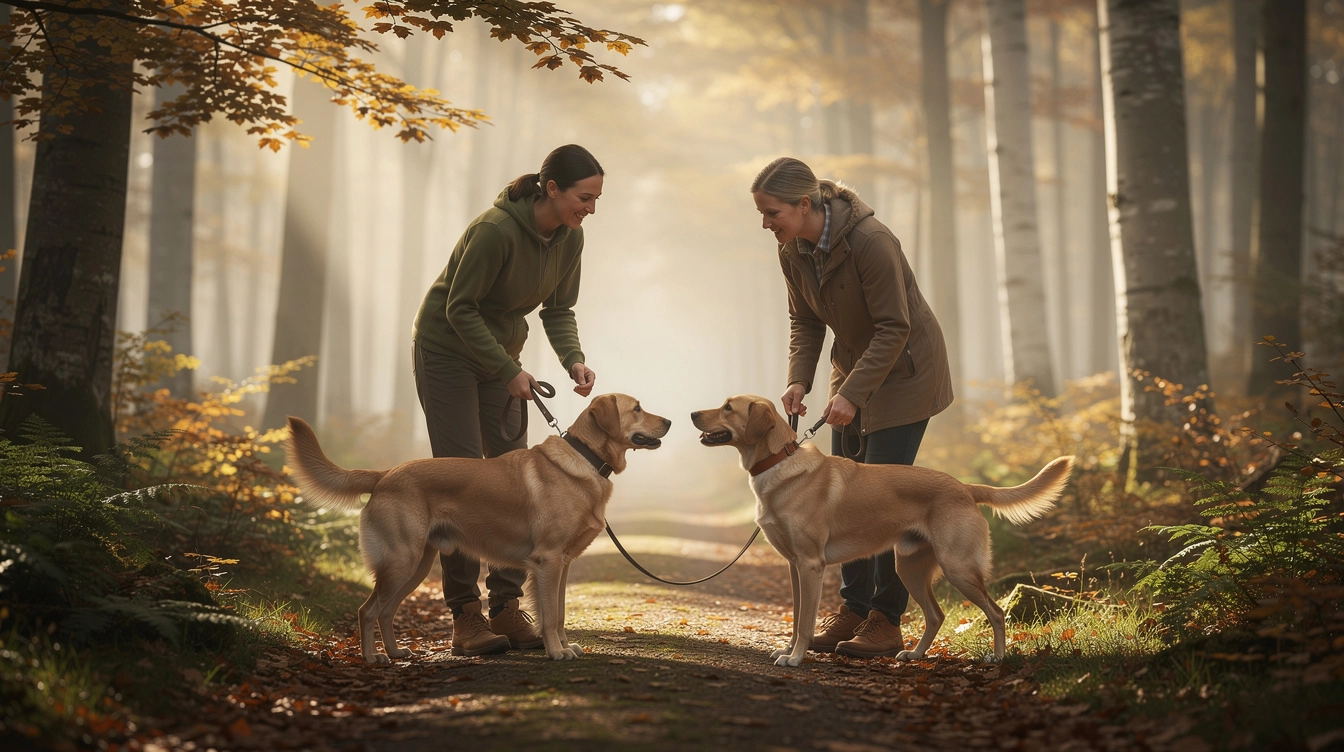
Do you have a dog that reacts aggressively towards other dogs? You probably know the sinking feeling in your stomach when you see another dog approaching. Your pulse rises, the lead tightens, and suddenly the whole walk is ruined. You are far from alone. A dog aggressive towards other dogs is actually one of the most common challenges Danish dog owners seek help for. The good news is that in most cases, it's something you can work on.
Why do some dogs react aggressively towards other dogs?
First and foremost, it's important to understand that aggression rarely arises out of nowhere. There's almost always an explanation behind the behaviour, and it can vary greatly from dog to dog.
As young puppies, dogs learn what is safe and normal in the world. Dogs that haven't had enough positive contact with other dogs in their early months can develop fear and insecurity towards other dogs. And fear is actually the most common cause of aggression. A dog that barks and lunges often isn't saying "I'm dangerous" but "I'm scared, keep your distance."
Other causes can include:
- Bad experiences with other dogs earlier in life
- Pain or illness, making the dog more irritable and reactive
- Resource guarding, where the dog doesn't want to share its owner, space, or toys
- Lack of social skills, because the dog hasn't learned to communicate properly with other dogs
- Breed and genetics, which in some dogs can mean a lower threshold for conflict
Understanding why your dog reacts is the first and most important step towards helping it.
Signs of aggression you should know: From subtle signals to open reaction
Aggression in dogs is rarely a bolt from the blue. It's an escalating ladder of signals, and the earlier you learn to read them, the better you can break the pattern.
Early and subtle signs include stiffening of the body, an intensely focused gaze, ears pulled forward or flat back, and a tail held stiffly horizontal or high. Unfortunately, these signals are often ignored because they resemble "tense attention" rather than a warning.
Then come clear warning signals like lip lifting, low growling, and showing teeth. Finally, it escalates to barking, lunging, and in the worst case, biting.
If your dog aggressive towards other dogs primarily shows early signs, you are in a much better position to work on the problem than if the situation has already escalated to a full reaction. Use the early signals as your cue to act, move away from the situation, and create distance.
How to train your dog to remain calm around other dogs
Training a reactive dog requires patience, consistency, and an understanding of the dog's threshold, i.e., the distance at which your dog can see another dog without reacting. This distance is your workspace.
1. Find the threshold and respect it Start training at the distance where your dog can still sense another dog but hasn't yet reacted. It could be 50 metres, it could be 100. It's individual.
2. Use positive reinforcement When your dog sees another dog and remains calm, reward it with treats or praise. You're building a new association: seeing another dog means something good happens.
3. Work gradually closer Over time, at your own pace, you can reduce the distance. It's not a linear process. There will be bad days. That's normal.
4. Avoid confrontations Encounters with other dogs that end badly worsen the problem. Be proactive, switch sides of the road, take an alternative route, and politely excuse yourself if another dog owner doesn't hold their dog back.
5. Work on your own energy Dogs are extremely sensitive to their owner's body language. If you tighten the lead and hold your breath when you see another dog, your dog senses it. Practice breathing calmly and avoid tightening the lead preemptively.
When should you seek help from a behaviour specialist, and how can dog parks be used gradually in training?
When a dog is aggressive towards other dogs to the extent that everyday life becomes stressful for both of you, or if biting has occurred, you should contact a certified behaviour specialist or animal behaviour consultant. A professional can observe your dog in specific situations and provide you with a tailored training programme.
Dog parks can actually play a fine role in gradual training, but it requires that you use them correctly. Start by visiting dog parks at quiet times, such as early mornings on weekdays, when there are fewer dogs. Stand outside the fence and let your dog observe the other dogs from a distance. It's controlled exposure without direct contact.
When your dog is ready, you can start entering the enclosure during periods of low activity. Be aware that fenced dog parks are not suitable for all dogs at all stages of training. Always check rules for dog parks so you're prepared for what applies to the specific place.
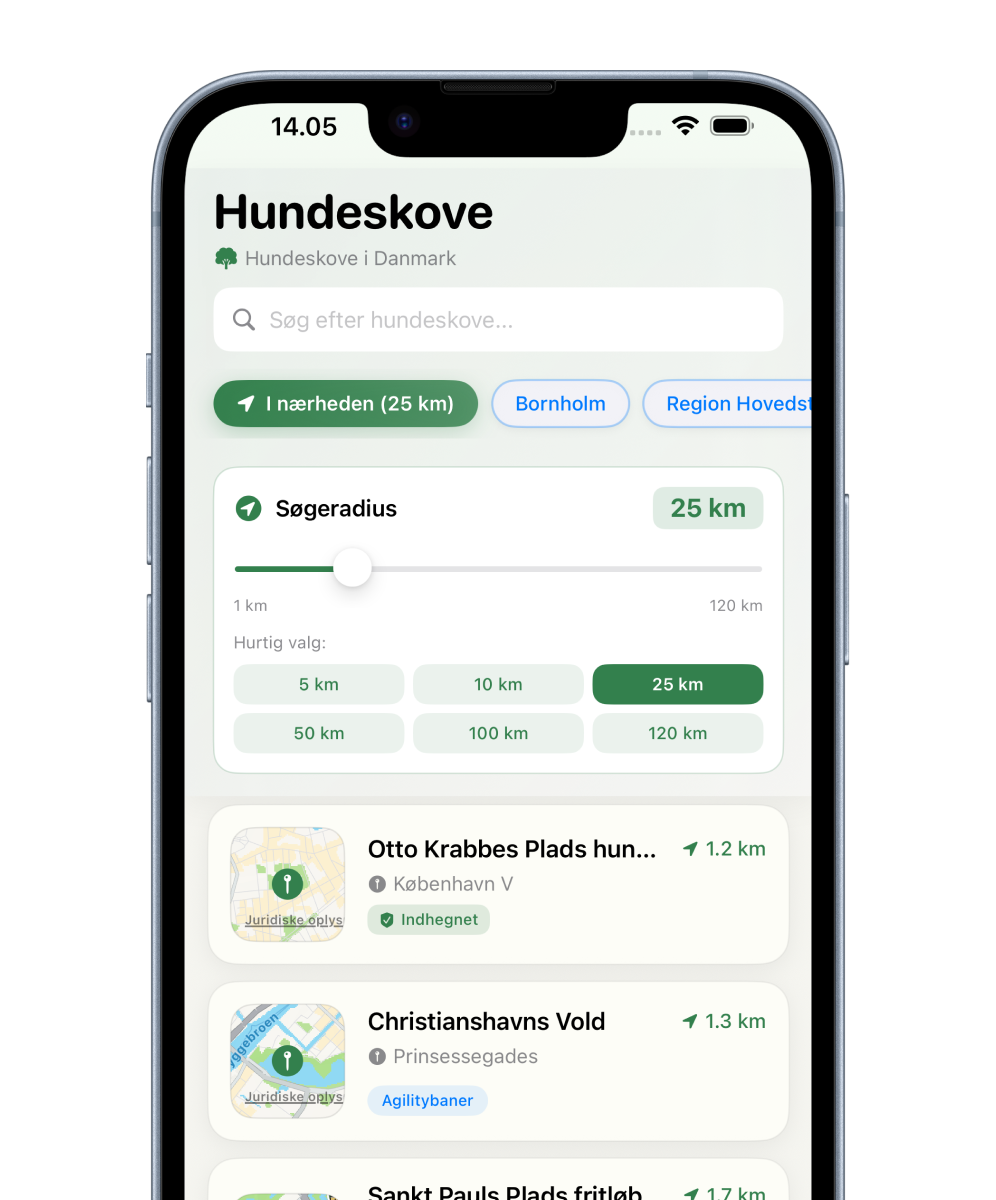
If you're unsure which dog parks are best suited to your situation, e.g., whether they are fenced or if there's good distance and space to work with thresholds, the Hundeskoven app can help guide you. You can see facilities and whether the park is fenced before you even set off, allowing you to plan visits that suit your specific stage in training. Find your next dog park among dog parks in the Capital Region or across the whole country, and download the app on the App Store.
A dog aggressive towards other dogs is a challenge, but it's not a life sentence. With the right understanding, structured training, and help from professionals when necessary, most dogs can learn to handle encounters with other dogs much better. Start at your own pace, be consistent, and celebrate the small victories along the way.