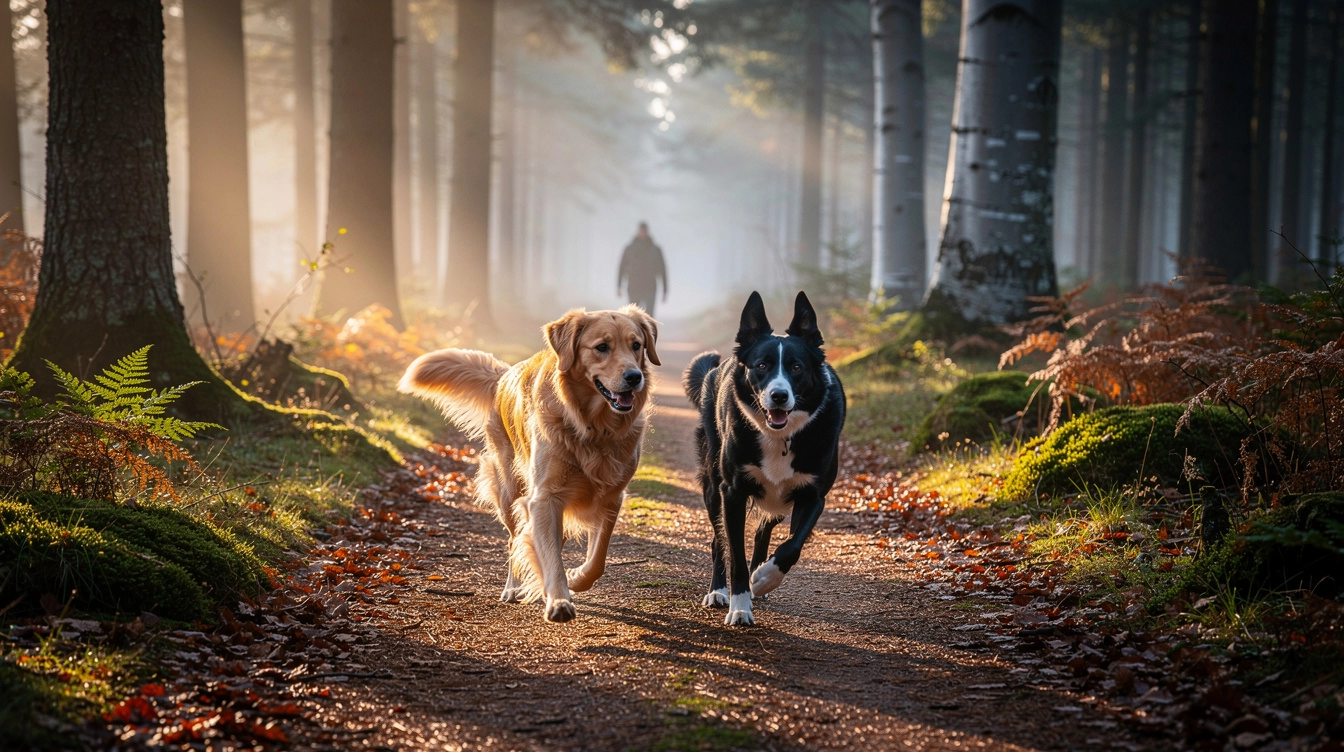
Dog training in the forest is one of the most effective things you can do for your dog's development. Not because the forest is a magical place, but because it offers precisely the challenges and opportunities that a closed training room can never provide. Here, there are scents, sounds, unpredictable situations, and plenty of space to work on what truly matters: that your dog listens to you, even when the world around it is full of temptations.
Why the Forest is the Perfect Place for Dog Training
In the forest, you can't control the surroundings. And that's exactly what makes it so valuable as a training arena. Many dogs are obedient at home or in the garden but completely fall apart when something unexpected happens. That's because they have never learned to focus on you in chaotic or stimulating environments.
The forest forces both you and your dog to work in reality. You learn to read your dog's signals, and your dog learns that contact with you is more rewarding than all the exciting things happening in the bushes. This is the foundation for true obedience.
Moreover, natural movement over uneven terrain, between trees, and along paths is healthy for the dog's body and mind. A dog that has been allowed to use its nose and navigate nature is a more balanced and calm dog.
5 Exercises You Can Train Directly in the Forest
Here are five exercises that work particularly well in the forest environment. Always start with a short warm-up walk so your dog has expended some energy before you begin working.
1. Contact Exercise with Name Call Call your dog's name and reward the moment it turns its gaze towards you. Do it unexpectedly while you walk and vary the timing. In the forest, there is plenty of competition from visual and scent impressions, so every time your dog chooses to look at you, it's a small victory.
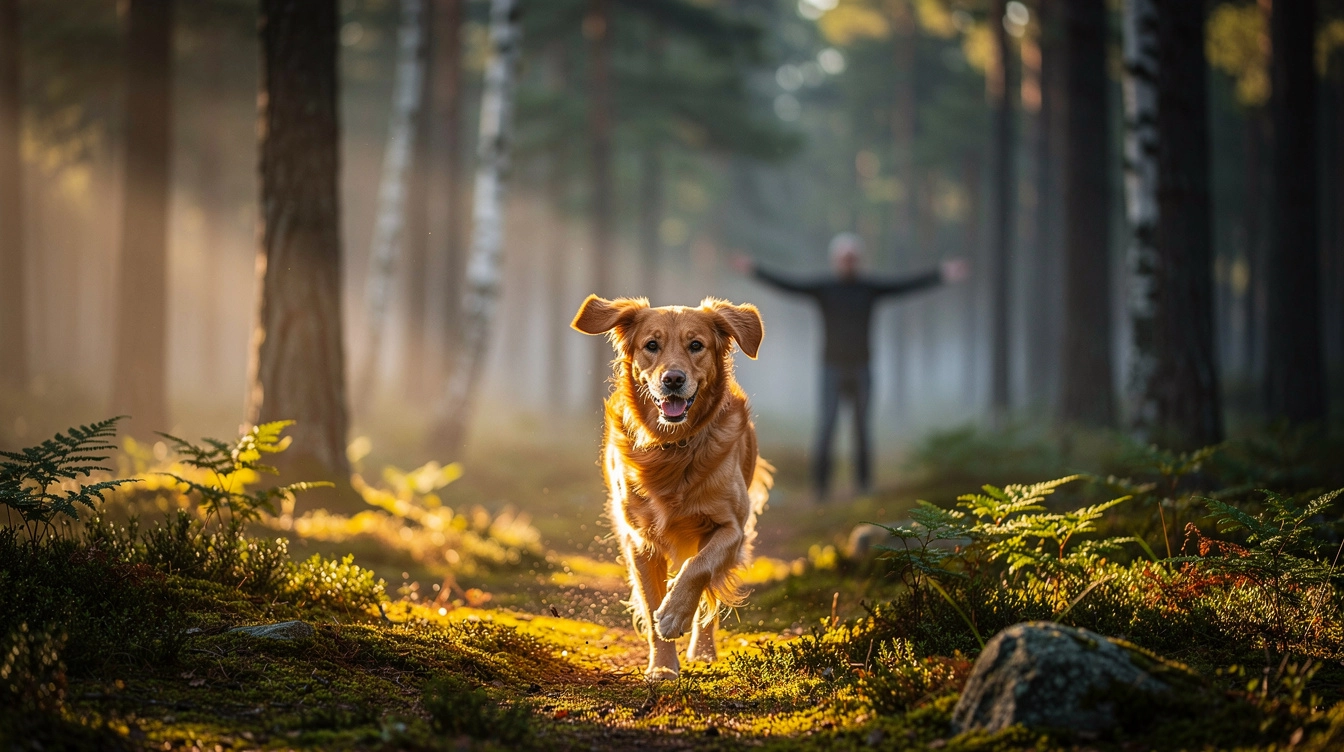
2. Recall Command Over Distance Find a long, open path. Let your dog sniff a bit ahead of you, then call it to you with a clear and positive voice. Reward generously. Gradually increase the distance as it succeeds. Avoid calling if you're not sure of success, and never use the command for something negative like interrupting play.
3. Basic Position and Wait Training at Natural Stop Points Use the forest's natural pauses, at a bench, a crossroads, or a water point, to ask your dog to sit and wait. It's an easy way to integrate training into the regular walk without it feeling like an exercise.
4. Forest Slalom Use the trees as natural slalom poles. Zig-zag between the trunks with your dog at your side. It trains attention and strengthens the close contact between you, without requiring equipment.
5. Marking and Searching Throw a treat or a toy into the low undergrowth of leaves and grass, and let your dog search for it. It activates the nose and provides mental exhaustion, which is just as important as physical exercise. You can gradually make it harder by hiding the treat before the dog sees it.
How to Handle Distractions in the Forest
Distractions are not the enemy. They are the very point of dog training in the forest. But there's a difference between working with distractions and being overwhelmed by them.
If your dog reacts strongly to birds, other dogs, or unfamiliar scents, start by creating distance. Find the point where your dog can still register the distraction but is still able to focus on you. This is called the threshold level, and it's where the training takes place.
Don't go directly towards what triggers the reaction. Work at the edge of what your dog can handle and reward any sign of self-control. Over time, the threshold will shift, and your dog will learn to treat distractions as something neutral rather than overwhelming.
Pay special attention to wildlife. Many dogs have a strong hunting instinct, which can make training in nature challenging. Start with a lead, work on a solid recall, and be realistic about what your dog is ready for. Practice makes perfect, but it requires patience.
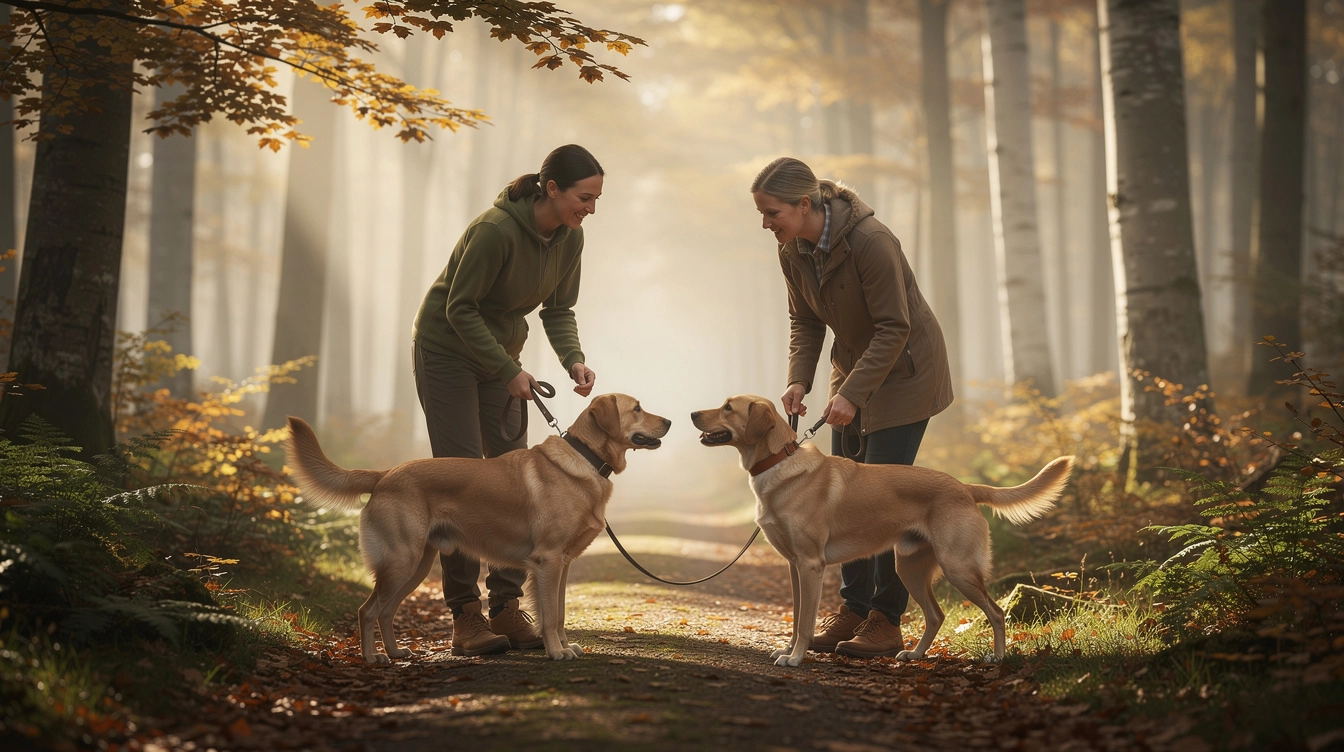
If you encounter other dogs, use it as a passing exercise. Avoid letting dogs greet each other in the middle of a training session, as it rewards the dog for ignoring you in favour of another dog. Instead, practice passing calmly with focus on you.
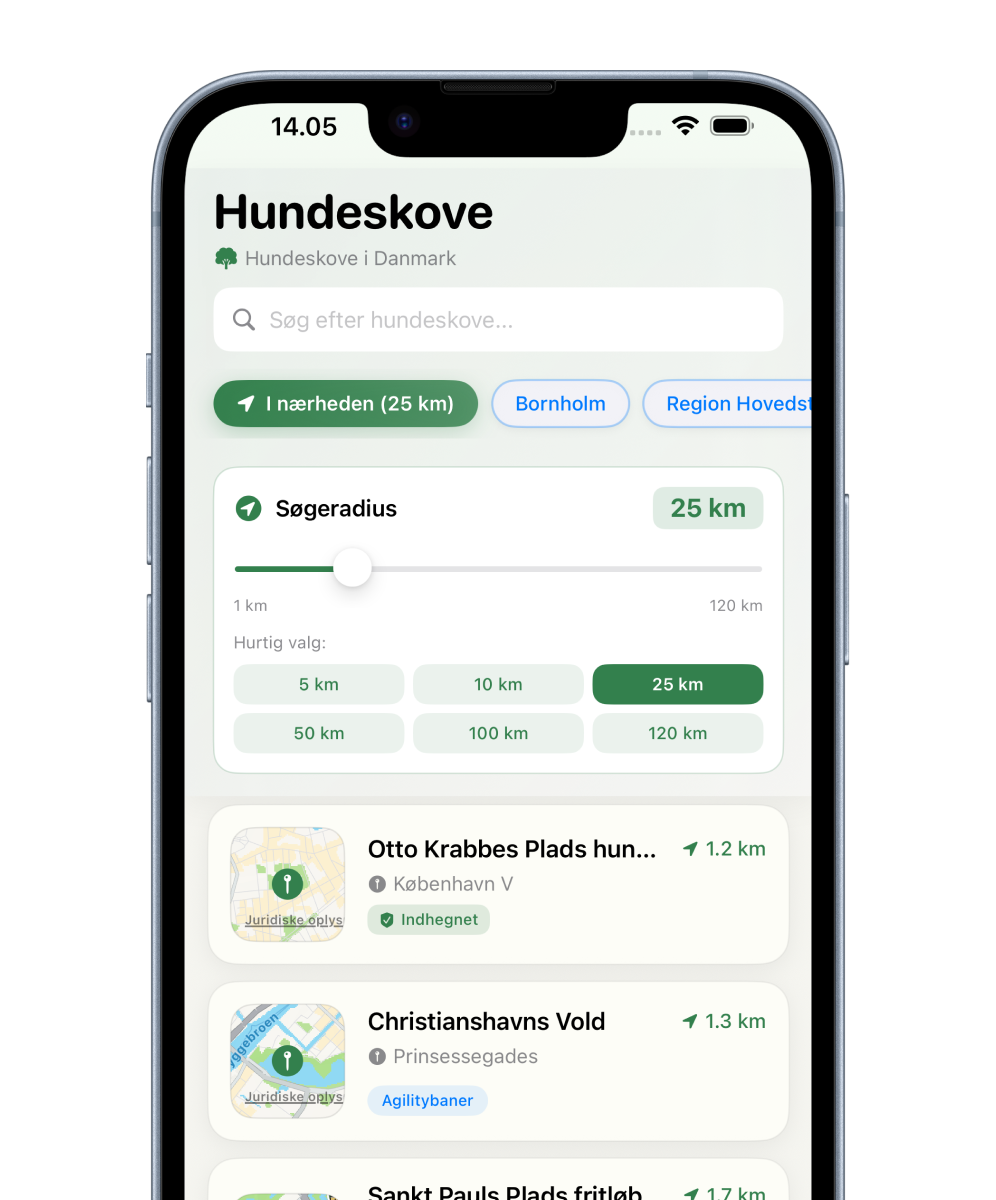
Find the Right Dog Park for Dog Training with the Hundeskoven App
Not all places are equally suitable for dog training. Fenced dog parks are ideal if you want to work with your dog in a controlled environment without a lead, while open forests with low visitor numbers can be good for building basic skills without too many distractions.
If you're looking for a suitable place, you can use the Hundeskoven app to check if a dog park is fenced and what facilities it has, including parking, waste stations, and water points. This makes it easier to plan a training session where you have control over the practical things in advance. You can also save your favourite places directly in the app, so you can easily return to the forest areas that work best for you and your dog.
You can find dog parks all over the country on hundeskoven.dk, including dog parks in Central Jutland and dog parks in the Capital Region, which are suitable for both beginners and more experienced dog owners.
So pack the treats, put on the lead, and head out to the forest. Dog training in the forest is not just for competition dogs or ambitious owners. It's for everyone who wants a dog that is confident, obedient, and happy, and who knows that you are worth listening to, even when the forest offers all the excitement.