
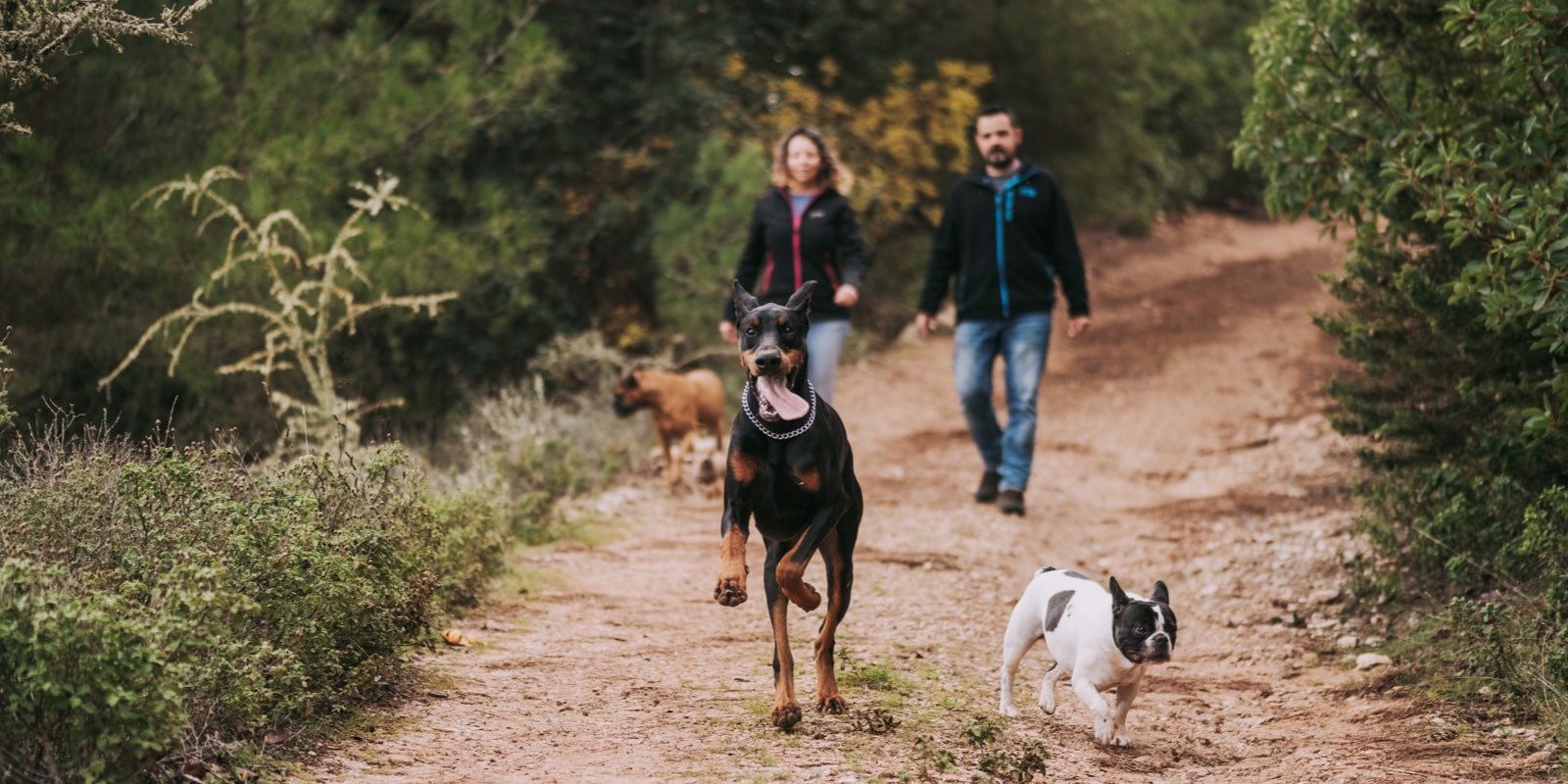
The dog park is the exception to the lead rules
As a rule, dogs must always be on a lead in the Danish countryside. This follows from the Danish Nature Protection Act (naturbeskyttelsesloven), and it applies all year round in the state forests. Dog parks are the big exception: here your dog may run free off the lead – but only if you have it fully under control.
There are more than 500 dog parks, off-leash areas and dog runs in Denmark. The Danish Nature Agency (Naturstyrelsen) runs more than 250 of them on state-owned land, while the rest are run by municipalities, associations and private forest owners. They are free to use and are generally open around the clock, all year round. Find a dog park near you here.
The most important dog park rules
- Your dog may be off the lead if you have it fully under control
- Your dog must come to you straight away when you call
- Your dog must not disturb, threaten or chase other dogs, people or wildlife
- If your dog cannot do that, it must be kept on a lead or at heel – in the dog park too
- Always pick up after your dog
- You use the dog park at your own risk
What does "fully under control" mean?
The term (in Danish "fuldt herredømme") comes from the Danish Dog Act and means that you can actively steer your dog's behaviour and stop it – for example, prevent it from running up to or getting into conflict with others. The Danish Nature Agency's practical rule of thumb is that the dog stays close to you, stops and comes at once when you call, and does not disturb other visitors, dogs or wildlife. If you are unsure whether your dog is up to it, use the lead – there is no shame in that.
Is the dog park fenced?
Many people think all dog parks are fenced – but they are not. Most of the Danish Nature Agency's dog parks have no fence, so the requirement to have your dog fully under control matters all the more there. Municipal dog parks are more often fenced. On Hundeskoven.dk you can see for every single dog park whether the area is fenced, so you can choose a fenced dog park if your dog does not yet have a reliable recall.
Who sets the rules?
A dog park can be owned by the Danish Nature Agency (the state), a municipality or a private landowner – and it is the owner who sets the rules. In other words, the Danish Nature Agency's rules do not automatically apply in municipal and private dog parks. So always read the signs at the entrance, where the local rules are usually posted.
The Danish Dog Act – what you need to know as a dog owner
The Danish Dog Act (Hundeloven, in Danish) applies everywhere – in the dog park too. The most important rules are:
- Leads in towns: In towns and built-up areas dogs must be kept on a lead on streets, roads, paths and squares – unless the dog is accompanied by someone who has it fully under control. The municipality can tighten this to an absolute lead requirement.
- Mandatory liability insurance: As a dog owner you are strictly liable for any damage your dog causes, and you are required to have liability insurance for your dog.
- Registration and identification: Your dog must be microchipped and registered in the Danish Dog Register (Dansk Hunderegister) before it is 8 weeks old. From 4 months of age it must wear a collar with the owner's name and address.
- No roaming dogs: Outside towns you must make sure your dog does not roam about on its own.
Breaches are punished with a fine. A dog off the lead or an unregistered dog typically costs around DKK 2,000, and missing liability insurance around DKK 3,000. The Dog Act also bans 13 dog breeds and crosses of them – including the pit bull terrier, tosa inu, American Staffordshire terrier and American bulldog. These breeds may not be brought into dog parks either.
Dogs in nature – outside the dog park
State forests
In the Danish Nature Agency's forests dogs must be on a lead all year round. This protects wildlife – leverets, ground-nesting birds and fawns are particularly vulnerable – and shows consideration for other visitors. The Danish Nature Agency actively enforces the rule, and a dog off the lead in nature typically means a fine of around DKK 2,000. In autumn and winter, be aware that hunts are held in the state forests from the end of October to the middle of January.
Private forests
In private forests your dog must also be on a lead, and you may only use roads and paths – and only from 6 in the morning until sunset. The owner can close the forest on days with hunting or intensive forestry work.
Uncultivated land
On uncultivated land such as heaths and meadows with public access, your dog must likewise be kept on a lead.
Dogs on the beach
The rules for dogs on the beach follow the Danish Nature Protection Act and change with the season:
- 1 April – 30 September: Your dog must be kept on a lead on the beach.
- 1 October – 31 March: Your dog may be off the lead if it is under control and not at risk of causing harm.
- All year: Where livestock is grazing, your dog must always be on a lead.
Some beaches ban dogs completely, and some coastal areas are protected bird reserves with special rules – so always keep an eye on the signs. There is also a growing number of dedicated dog beaches where dogs may be off the lead all year round.
Puppies in the dog park
Vets recommend that puppies wait to visit places with lots of unfamiliar dogs – such as dog parks – until they are fully vaccinated. A puppy's primary vaccinations typically start at 8 weeks and are repeated at 12 and 16 weeks, so most puppies are ready for the dog park after about 16 weeks. Ask your vet what applies to your puppy.
Some dog parks have special puppy areas – smaller enclosures reserved for puppies and small dogs, where they can play in peace away from the big adult dogs.
In season – should your bitch stay at home?
Yes, it is recommended to keep bitches away from the dog park for the whole of their season, which lasts about three weeks. Male dogs become very pushy, it stresses the bitch, and the risk of an unwanted mating is highest around days 10–20. Keep her on a lead on walks during this time – even if she normally has a reliable recall.
Avoiding infection in the dog park
Places where lots of unfamiliar dogs meet are also the places where infections spread most easily. Kennel cough, for example, spreads through nose-to-nose contact, coughing and shared water bowls – and winter is peak season. You can reduce the risk by:
- Keeping your dog's vaccinations up to date – there is a vaccine against kennel cough
- Bringing your own water bowl instead of using shared water points
- Staying at home if your dog is coughing or showing signs of illness
- Picking up after your dog – droppings can contain bacteria and intestinal worms that infect other dogs
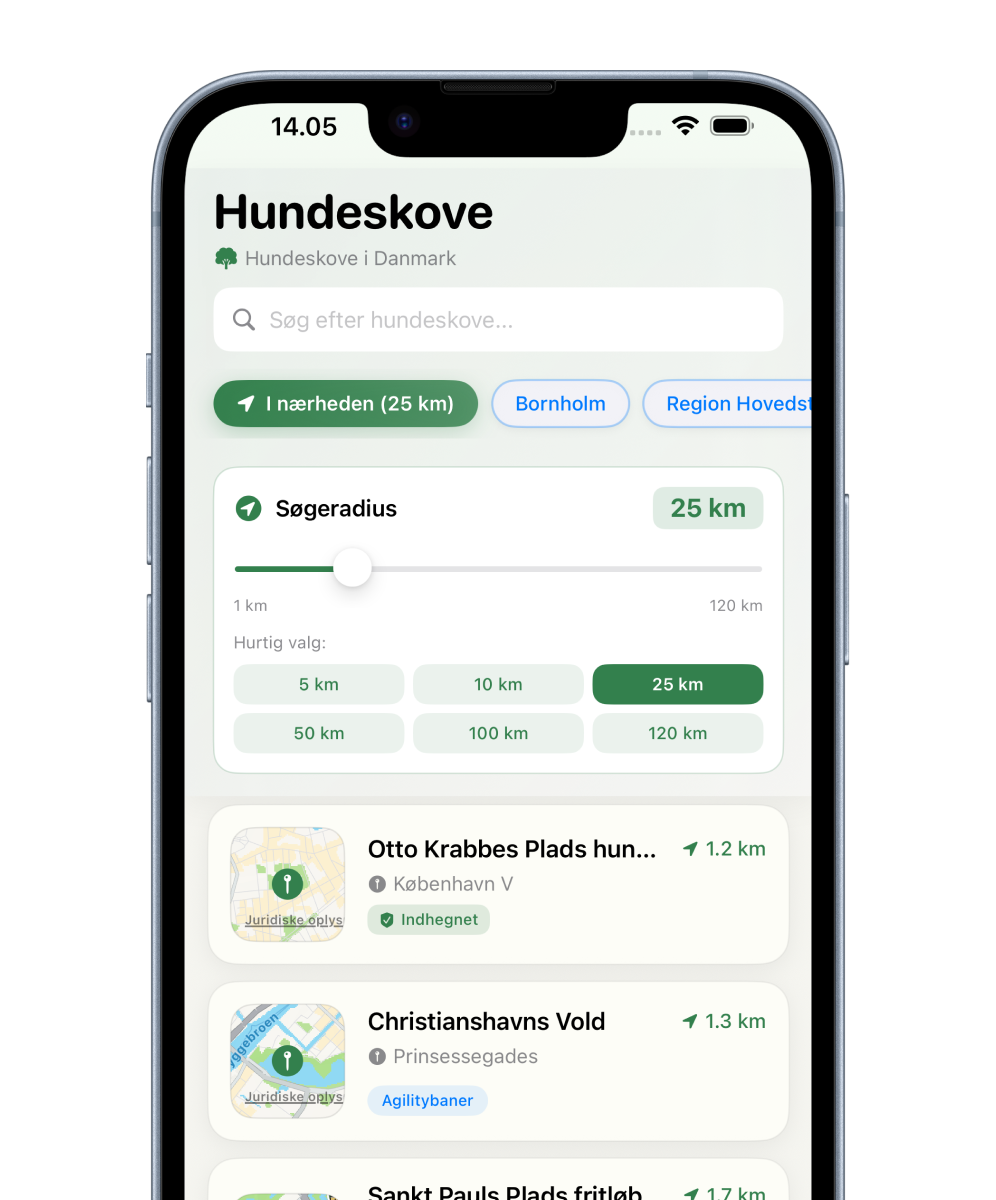
Put Hundeskoven in your pocket 📱
With our app for iOS and Android you can quickly find dog parks nearby, save your favourites and get directions straight from the Hundeskoven app.
The Hundeskoven.dk website is free to use. If you'd like to support the work, get the app – you get the map, favourites and directions, and it keeps the site running.
Available in Danish, English, Swedish, Norwegian and German - ideal for dog owners from Denmark and abroad! 🇩🇰 🇬🇧 🇸🇪 🇳🇴 🇩🇪
Features:
- Find dog parks close to where you are
- Interactive map with every dog park
- Save your favourite dog parks
- Get directions right in the app
- See facilities and information for each dog park





“Happiness is a warm puppy.”
Tips for your visit to the dog park
Below we have gathered some tips to make your trip to the dog park a good experience for both dog and owner.
Off the lead in the dog park
Perhaps you are one of the dog owners who keeps their dog on a lead inside the dog park just to be safe. If you have an obedient dog, though, that is often a bad idea, because dogs behave more naturally and calmly off the lead. Dogs on a lead inside the fence may even feel threatened by other dogs running free. That said, it is perfectly fine to use the lead for an inexperienced young dog that needs to get used to the forest, or if its recall is not yet reliable.
Practise recall and leadership
A trip to the dog park is an excellent chance to train. Let your dog wait calmly at the entrance gate before you open it and let it go – that way your dog quickly learns that calm is rewarded with freedom. Bring your dog's favourite treats and reward it every time it comes when called, so coming back to you is always fun. Do not give treats to other people's dogs without the owner's permission.
Walking nicely on the lead on the way
The walk to the dog park is a perfect opportunity to practise loose-lead walking. When your dog is repeatedly rewarded with freedom in the forest, it learns this difficult exercise much faster. Use the same command every time, and praise your dog calmly when it walks nicely.
Signs
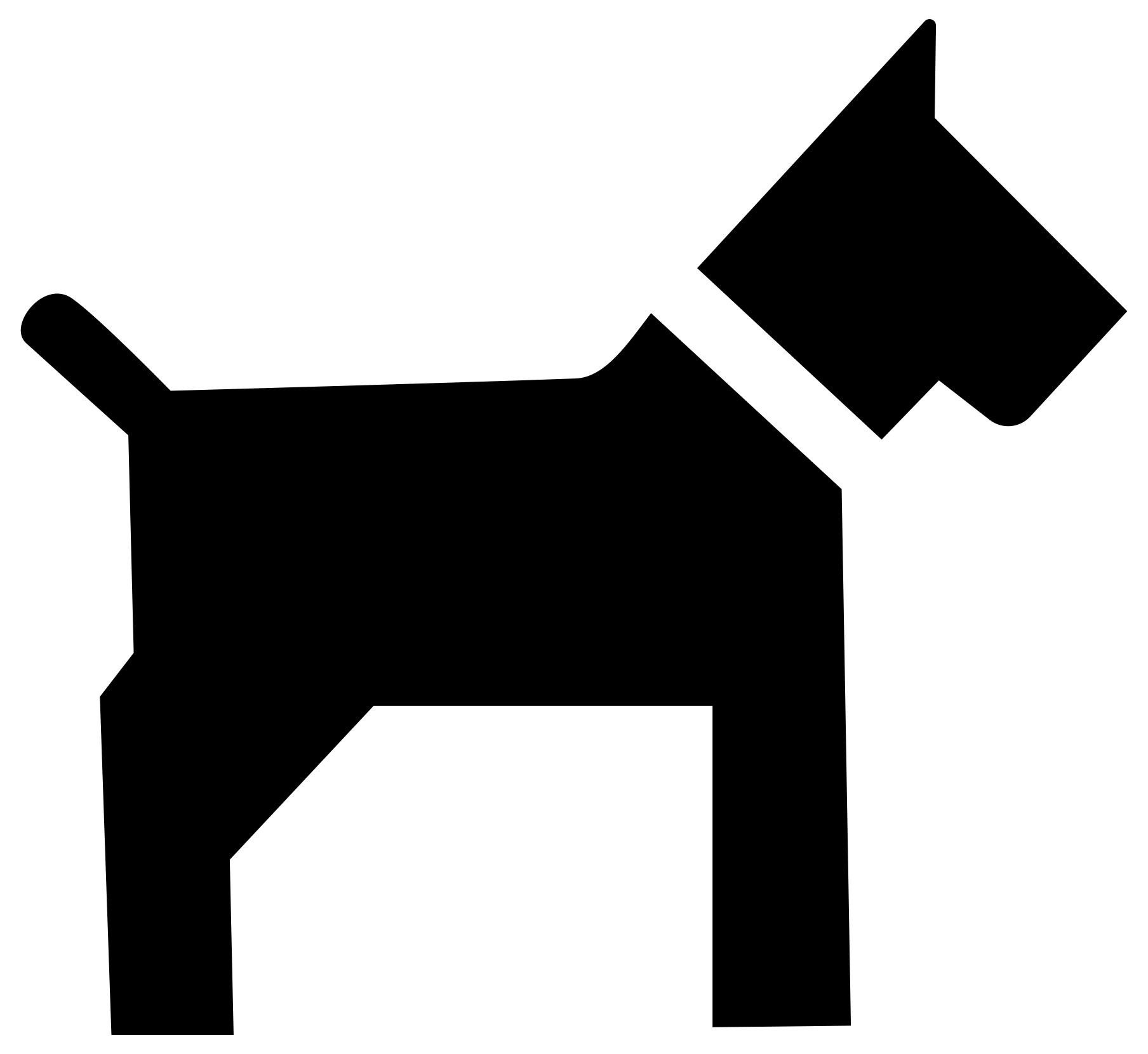
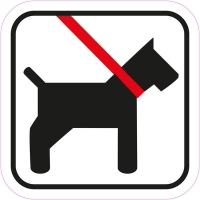
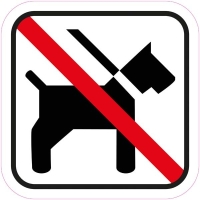
Below are 3 typical signs you will come across when you are out with your dog.
Be considerate
Even if your dog is under control, it can seem frightening to others if it barks or runs towards them. Many people feel uneasy around dogs they do not know, and not every dog in the forest is equally sociable. Give people space, respect other people's boundaries – and remember that a good experience for everyone is what keeps dog parks open and popular.
Frequently asked questions
Does my dog have to be on a lead in the dog park?
No – not if you have it fully under control. Your dog must stay close, come straight away when called and must not disturb others. Otherwise it must be on a lead, in the dog park too.
Are all dog parks fenced?
No. Most of the Danish Nature Agency’s dog parks are not fenced. Check the individual dog park here on the site before you let your dog off the lead.
Does it cost anything to use a dog park?
No, dog parks are free and are generally open around the clock, all year round.
When may my dog be off the lead on the beach?
From 1 October to 31 March, if it is under control. From 1 April to 30 September it must be on a lead on the beach.
When can puppies come to the dog park?
Typically once they are fully vaccinated, after about 16 weeks. Ask your vet for advice.
Can my dog go to the dog park while she is in season?
It is best not to for the whole season of about three weeks. Keep her on a lead on your walks instead.