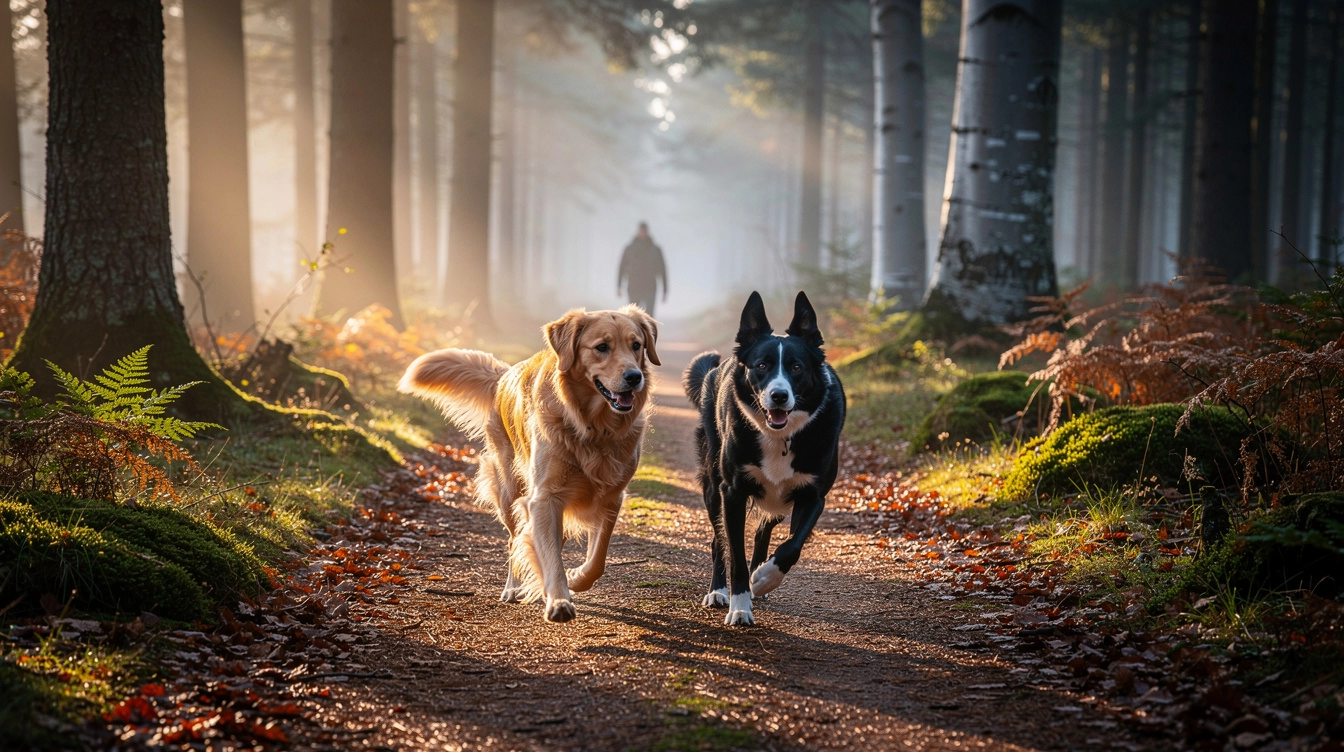
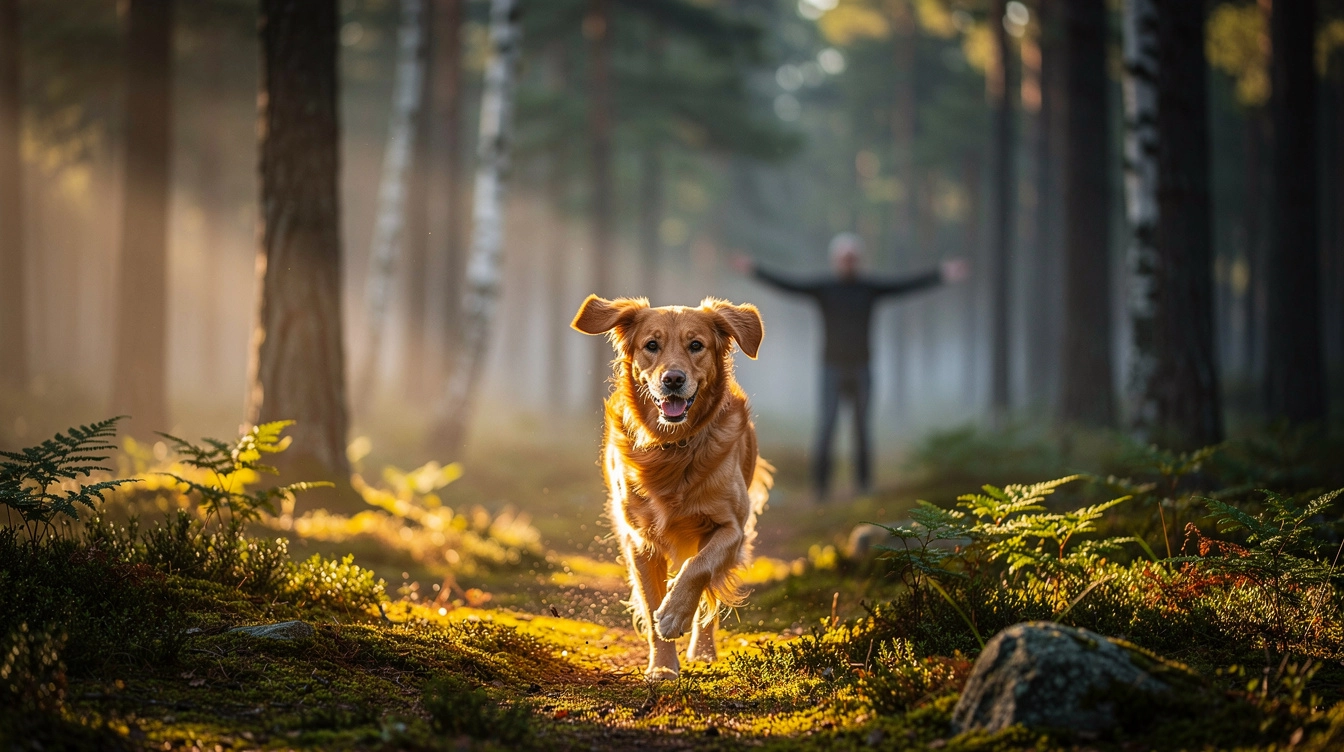
Seeing your dog run free in nature is one of the greatest joys of having a dog. But a dog running free in nature is not just a matter of freedom — it's a matter of safety, trust, and the right preparation. Many dog owners experience the same situation: the dog seems ready, you let go of the lead, and then it disappears into the bushes after a deer. So what does it really take before you can let your dog run free with peace of mind?
When is your dog actually ready to run free — and what does the law say?
Let's start with the legal aspect, as it's important. In Denmark, dogs must be kept on a lead in most natural areas from 1 April to 30 September to protect the breeding season of wild animals and birds. Outside this period, there is more freedom, but municipal rules and local signage can still impose restrictions. It is your responsibility as a dog owner to know the rules for the area you are in.
But putting the law aside: when is your individual dog ready to run off the lead in the forest or on the beach? Here are three questions you should honestly ask yourself:
Does the dog come to you when you call — even when there are distractions? Not just at home in the garden, but when there are other dogs, bird scents, or exciting sounds nearby.
Does the dog maintain eye contact with you on its own? A dog that regularly checks in and looks back at you is a dog that is still aware that you are a team.
Have you tested with a long line? Before you let go of the lead completely, you should have used a long line of 10-15 metres for many months. It's not a sign of weakness — it's good, systematic training.
If you can answer yes to all three, you are well on your way.
The most important exercise: How to train a reliable recall step by step
Recall is the foundation for all work with a dog running free in nature. Without a solid recall, freedom in nature is not freedom — it's a lottery. Here's how to build it up:
Step 1 — Make recall the best thing in the world. Every single time your dog comes to you on signal, it should pay off massively. Use the treat your dog would sell its soul for. Lots of praise, contact, and enthusiasm. Teach your dog that recall is always a positive experience — never something that leads to the lead being put on and the fun ending.
Step 2 — Train in increasing difficulty. Start at home, move to the garden, then a quiet path, and finally in a full natural environment. Each new environment is essentially a new place to learn recall again, because the dog needs to generalise the skill.
Step 3 — Use a long line as a safety net. A long line gives the dog a sense of freedom while you can still prevent it from disappearing. Practice recall on a long line, and reward only when the dog has actually come all the way to you — not halfway.
Step 4 — Build in unpredictability. Call your dog to you in the middle of play, give a treat, and let it go again. This teaches it that recall doesn't always mean the fun stops. It's one of the most effective ways to strengthen recall in the long term.
Distractions in nature: How to keep your dog's attention among wild scents and other dogs
Nature is a sensory feast for your dog. Deer, hares, birds, other dogs, human tracks — it all competes for attention. And this is exactly where many dog owners' otherwise fine recall breaks down.
The secret is not to wait until distractions arise and then hope for the best. It's to actively train with distractions as part of the exercise.
When you're out on a path and your dog starts sniffing intensely, it's a perfect moment to practice recall — while the dog is still on a long line. Does it succeed? Celebrate it big. Does it not succeed? It tells you that you need to step back in training.
Also practice becoming interesting. Suddenly change direction, go behind a tree and hide briefly, run away from the dog instead of after it. A dog that never knows what you'll come up with naturally keeps a better eye on you than a dog that knows you always walk the same path at the same pace.
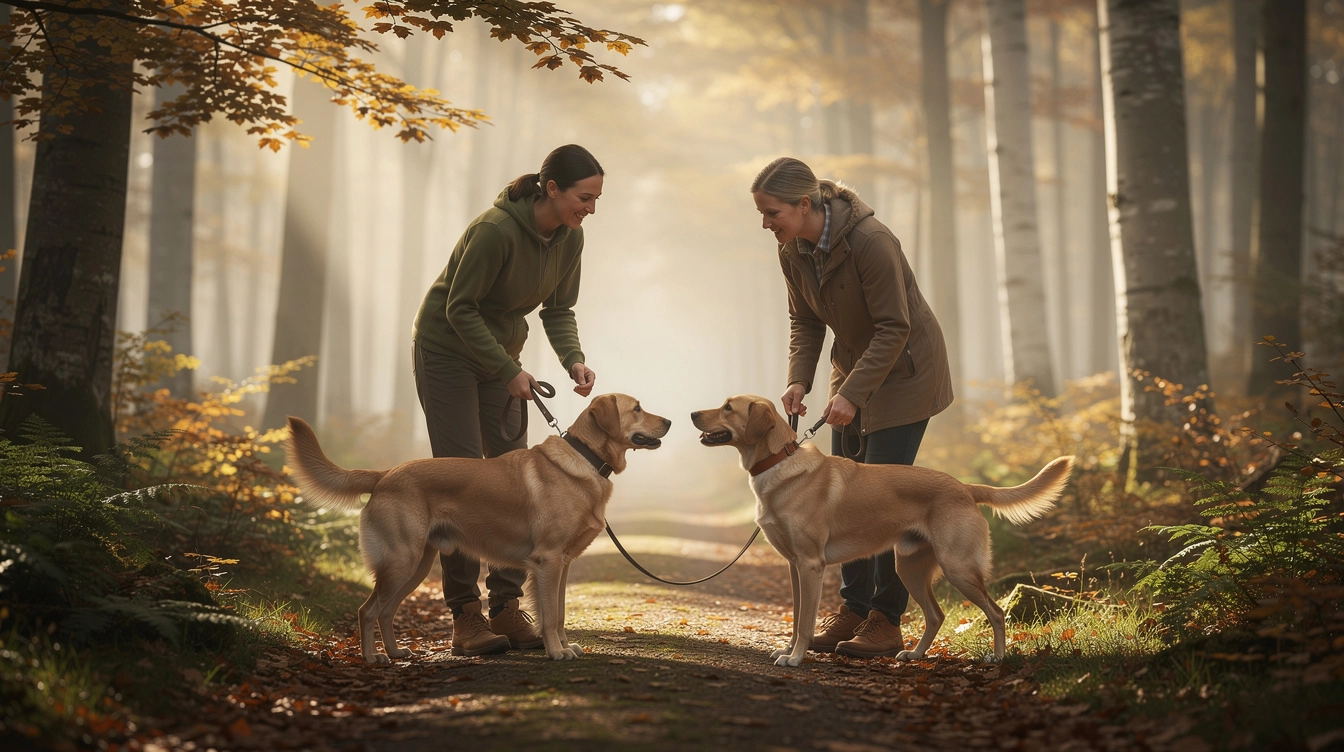
If you encounter other loose dogs that distract your dog a lot, it's a sign that you need a more controlled training environment — for example, a fenced dog park, where you can practice with fewer variables.
Find the right places to practice — use hundeskoven.dk to find fenced dog parks near you
Finding the right places to practice your dog free in the forest makes a big difference. A fenced dog park is ideal for the early stages of freedom training because the dog can't run far away, and you can focus on recall without worrying about traffic or wildlife-protected areas.
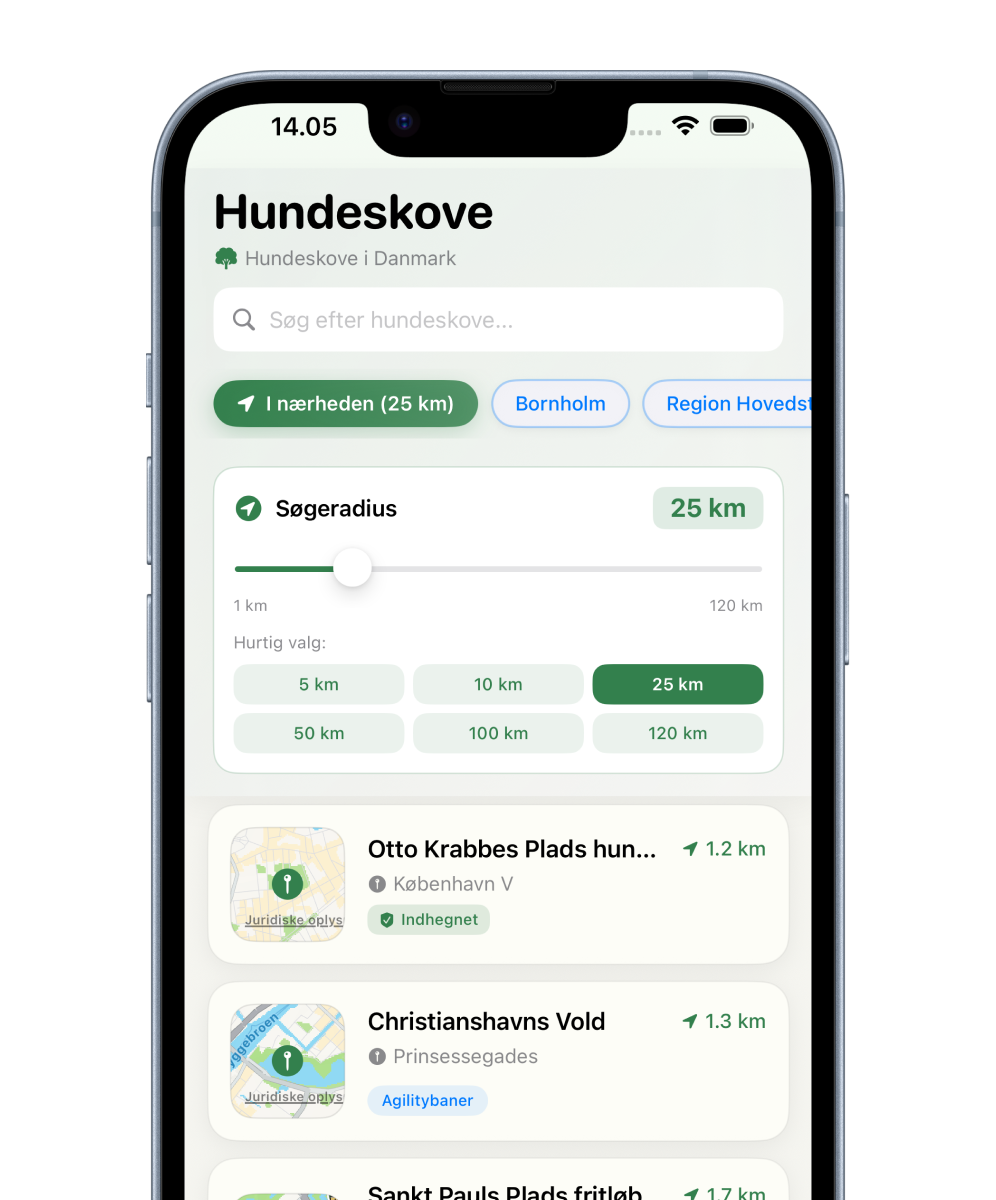
On hundeskoven.dk you can find dog parks all over Denmark — whether you live in the Capital Region, in Central Jutland or anywhere else in the country. You can filter whether the park is fenced and see what facilities are available such as parking, water points, and waste stations.
If you have an iPhone, you can download the Hundeskoven app on the App Store (search for Hundeskoven or use ID 6751423668). It finds dog parks near your current location and gives you directions directly there — handy when you're new to an area and want to find a good place to practice with your dog running free in nature.
It takes time to build the freedom that brings joy to both of you. But with systematic recall training, the right surroundings, and patience, the day will come when you can let go of the lead and just enjoy the sight of your dog racing off — and coming back when you call.