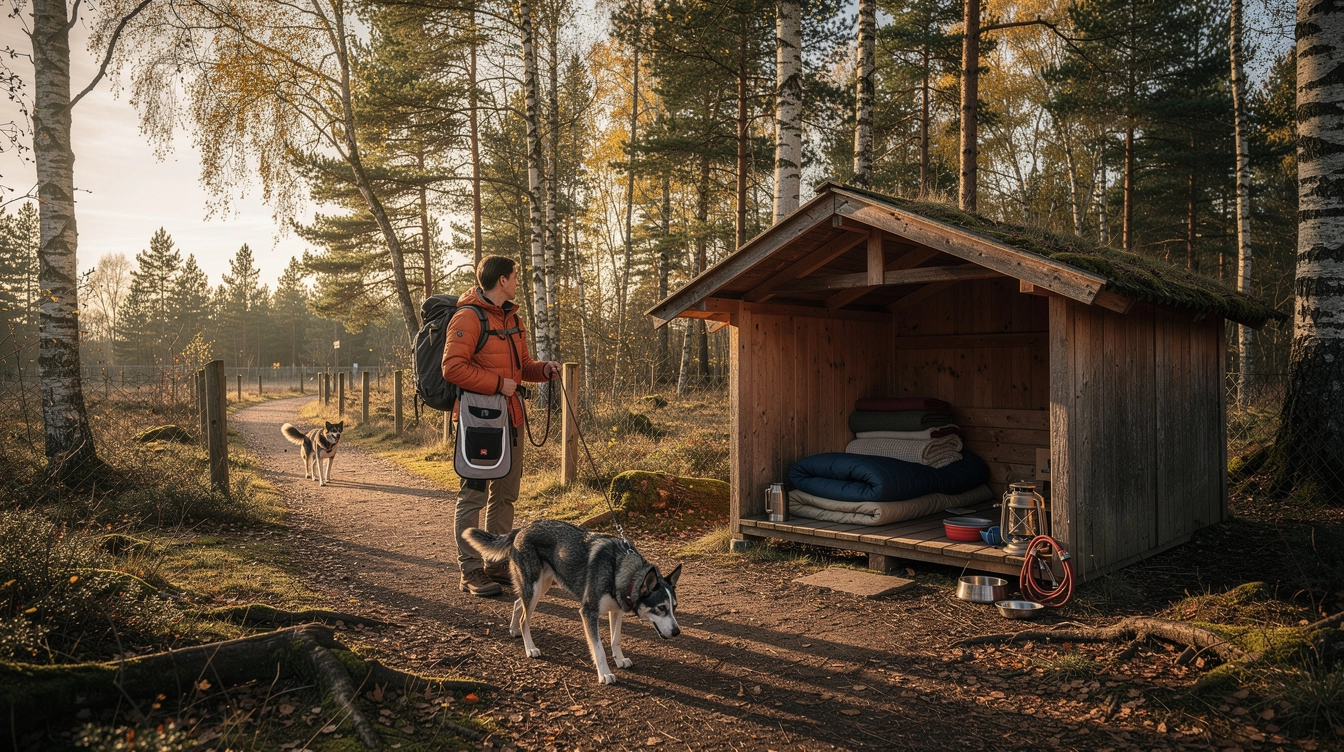
A dog park with a shelter can be the starting point for a cosy overnight stay, where both you and your dog enjoy fresh air, new scents, and quality time together. In Denmark, shelters are not always located within the dog park itself, so it requires some planning to find a place where off-leash, overnight stays, and dog-friendly rules align.
How to Find a Dog Park with Shelter and Good Off-Leash Opportunities
Start by looking for a shelter site close to a dog park or a larger natural area where your dog can move freely. A short distance between the accommodation and the dog park makes the trip more manageable, especially if you have gear with you or if your dog gets tired after many hours of activity.
First, check if the shelter needs to be booked. Many popular sites can be reserved through a municipality, the Danish Nature Agency (Naturstyrelsen), or a private provider. Others operate on a first-come, first-served basis. Always read the description carefully and check if dogs are allowed at the site itself. It's not enough that there's a dog park nearby.
When choosing a dog park, you should especially look for:
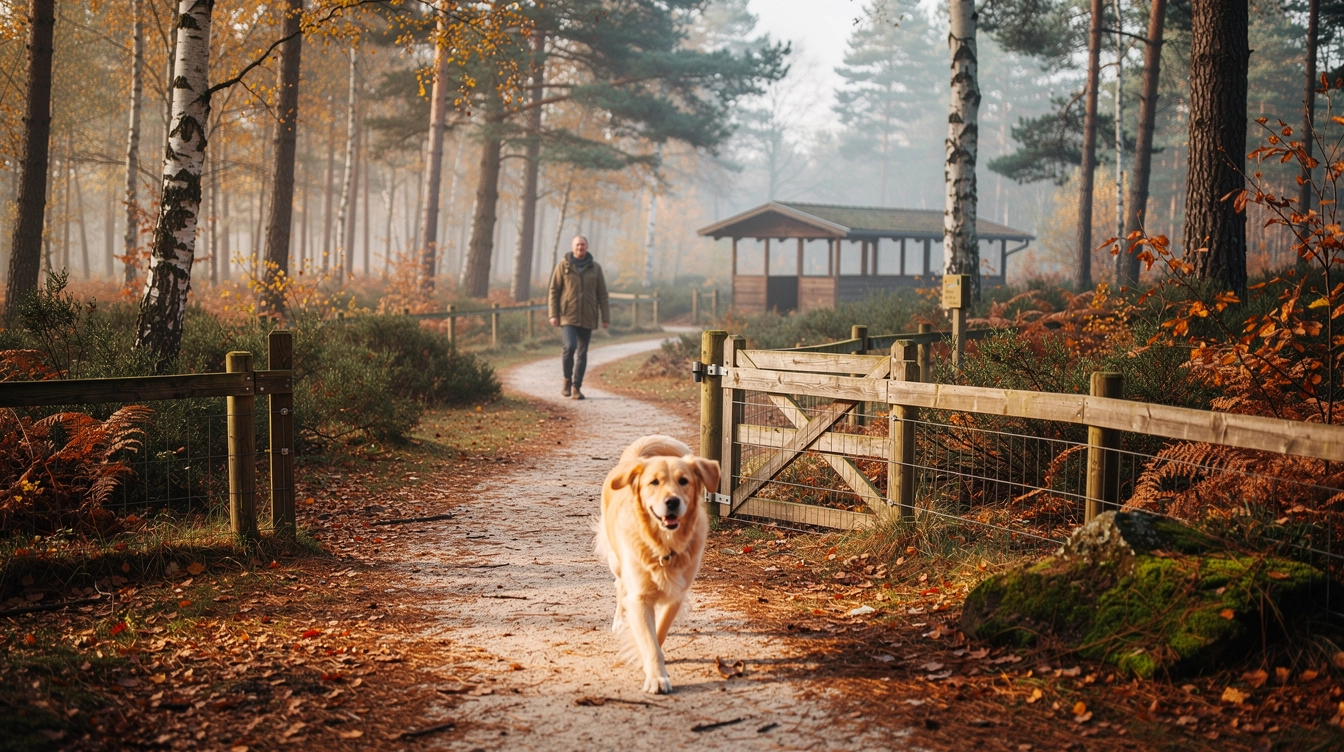
- Whether the area is fenced or open
- The distance from the shelter to the dog park
- Whether there is parking close to the site
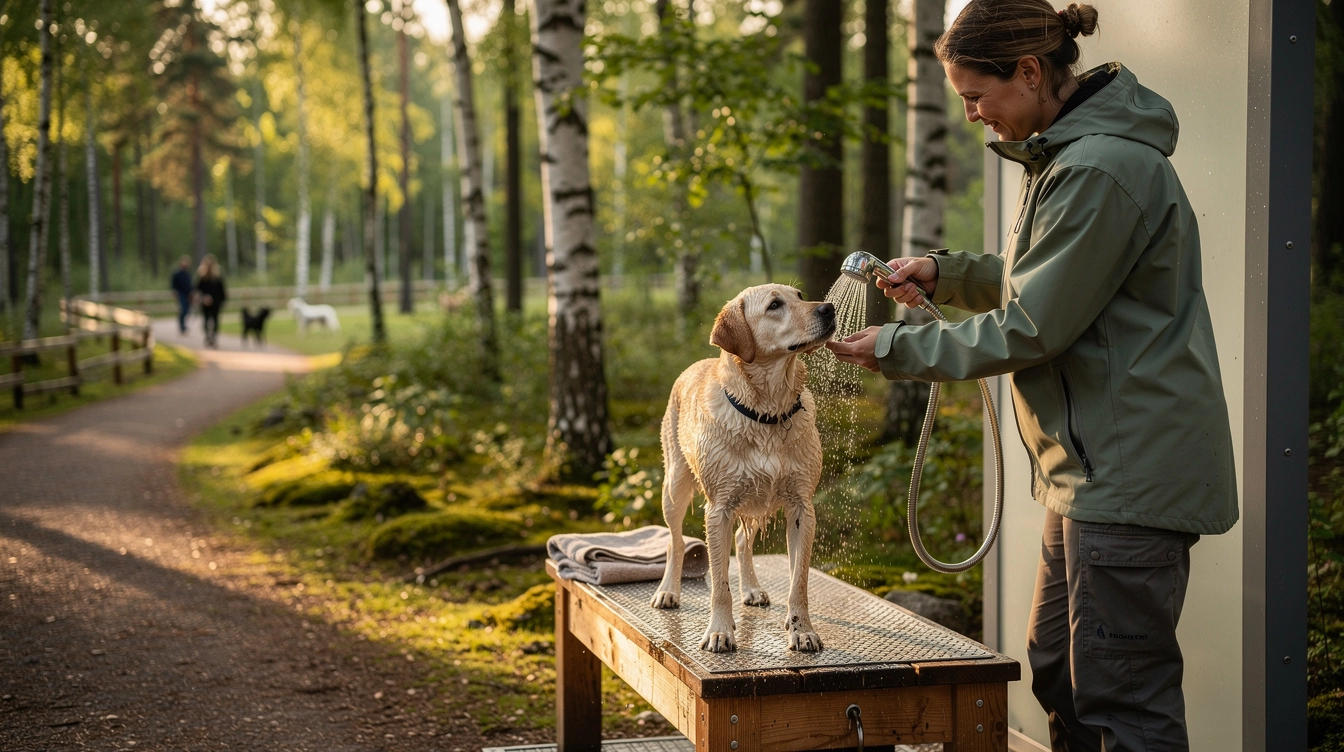
- Access to water or a water point
- Benches, tables, fire pit, and waste stations
- Whether the area has paths, forest floor, and opportunities for quiet breaks
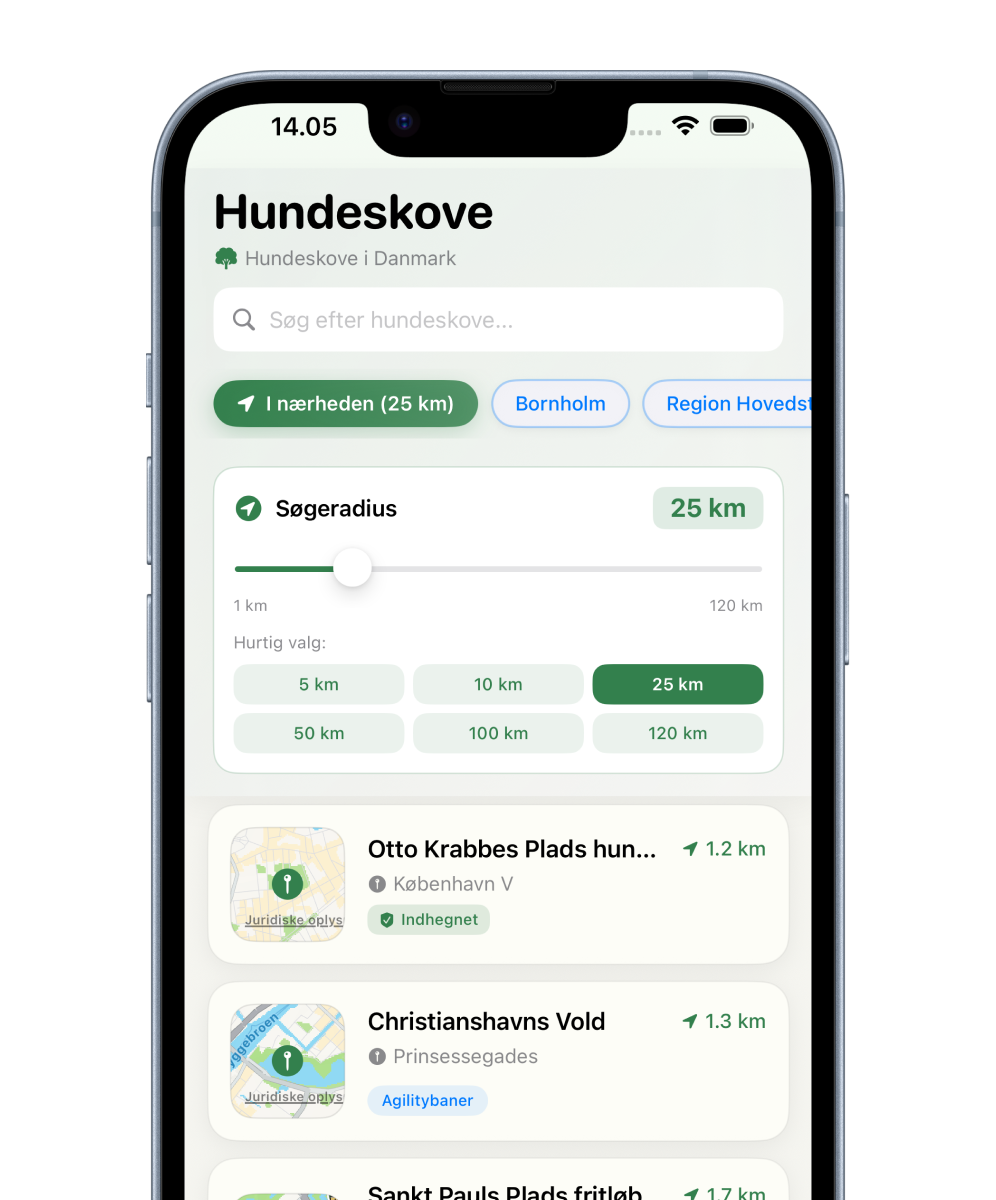
On dog parks in Central Jutland and in other regions, you can find inspiration for natural areas where a dog-friendly overnight stay can be combined with good walks. Also, feel free to use the Hundeskoven app to see if a dog park is fenced and what facilities are available before you leave home.
What to Check Before an Overnight Stay with Your Dog in Nature
A shelter trip with your dog is best when you pack according to the weather, terrain, and your dog's habits. Bring a firm sleeping place, such as a blanket or an insulating mat, so your dog doesn't have to lie directly on cold or damp ground. An extra towel is useful after rain or a walk through wet grass.
Remember plenty of water for both you and your dog. A nearby lake or stream is not necessarily suitable as drinking water, and water points may be out of order. Therefore, bring a collapsible bowl and a water container. Food should be stored closed so it doesn't attract animals at night.
A practical dog kit for the shelter trip can consist of:
- Lead, harness, and possibly a long lead
- Reflectors or lights for dark paths
- Paw cleaner and towel
- Tick remover and your dog's usual first aid
- Waste bags and extra bags for wet gear
- Blanket or dog sleeping bag
- Documentation for vaccination if the trip is to a place with many visitors
Also, consider your dog's temperament. A shelter site can be close to other dogs, children, cyclists, and people around a fire. A dog running free in a fenced dog park may still need a lead at the shelter. Provide your dog with a calm base and don't let it greet everyone who passes by.
Rules, Considerations, and Safety at Shelter Sites Near Dog Parks
Rules can vary from area to area. In a dog park, dogs are often allowed off the lead, but this doesn't necessarily mean they can be off the lead at the shelter site, parking area, or on the paths to it. Read the signage on-site and familiarise yourself with rules for dog parks before you set off.
Be considerate of other overnight guests. Keep your dog under control, especially if the site is shared, and avoid letting it run to strangers' tents or shelters. Always clean up, even on forest paths and around the fire pit. If your dog barks a lot, digs, or guards the shelter, you should find a more secluded spot or go home.
Be aware of wildlife. Spring and summer are periods with nesting birds and young animals, and even a friendly dog can disturb or chase them. In open natural areas, your dog should generally be on a lead unless there is clear access to off-leash areas. Keep it close to you near roads, cycle routes, and areas with horses or grazing animals.
Check the weather forecast before departure. A shelter doesn't always protect against side winds, and hot summer days can make a site without shade uncomfortable. In heavy rain, storms, or very low temperatures, an overnight stay might not be the right solution for your dog. Plan a shorter trip the first time to see how it reacts to sleeping outside.
Find Dog Parks, Shelters, and Off-Leash Areas with Hundeskoven.dk and the App
The easiest way to plan your trip is to combine a shelter map with information about the nearest dog park. First, find a shelter site, check the rules for overnight stays and dogs, and then explore the route to a suitable off-leash area. This way, you know where your dog can have a good run without having to walk far with all your gear.
Feel free to plan a route that includes both activity and breaks. A trip to the dog park can be in the afternoon, while the morning is used for a quiet sniffing tour in the area. Remember, mental stimulation often tires your dog more than constant running, so give it space to explore the forest floor at its own pace.
A dog park with a shelter can be a wonderful little outing when rules, distances, and facilities are checked in advance. Pack simply, be considerate of others and nature, and choose a place that suits your dog. When you're ready to find the next dog park and get directions directly to the area, you can download the app here and plan a new trip into the Danish nature.