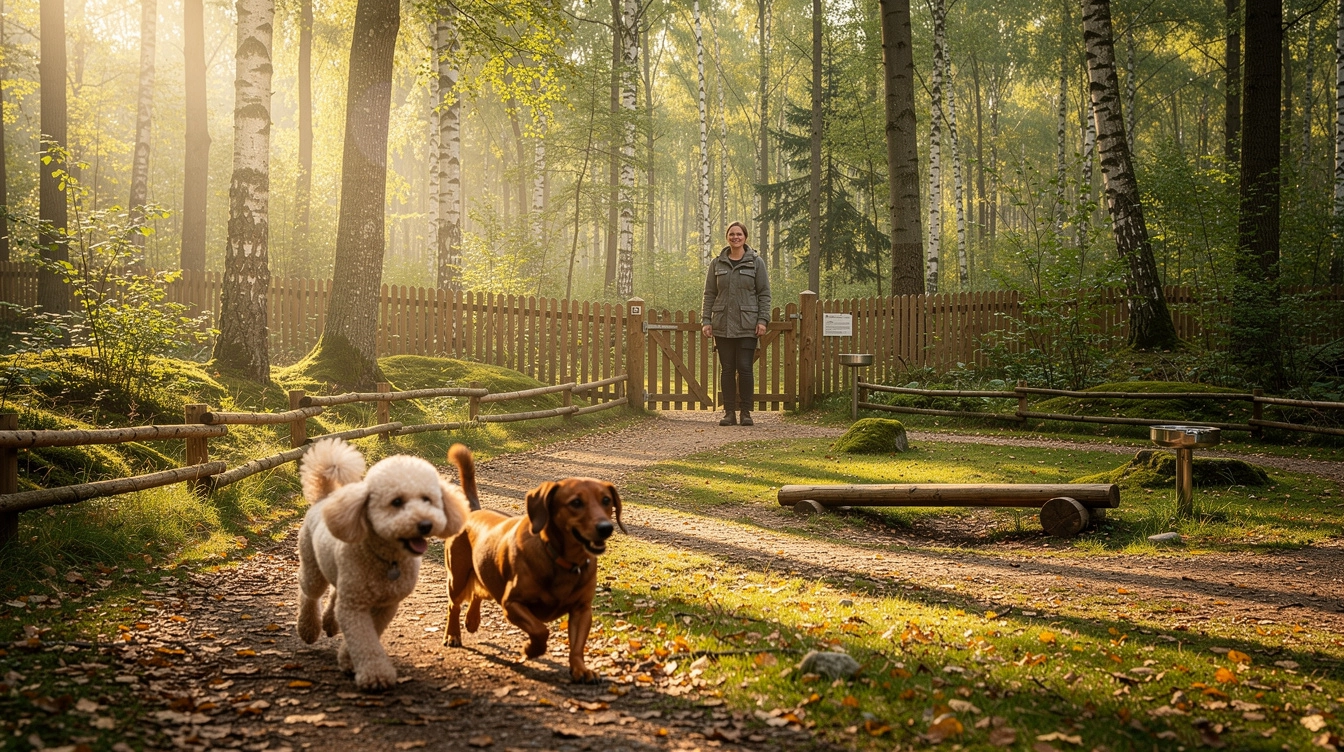
A dog park for small dogs should be more than just a place with a fence and some trees. For a small dog, a good outing is about safety, manageable surroundings, and the ability to move freely without being overwhelmed. With the right choices, the dog park can become a regular, positive part of daily life – for both the dog and you.
What to Look for in a Dog Park for Small Dogs?
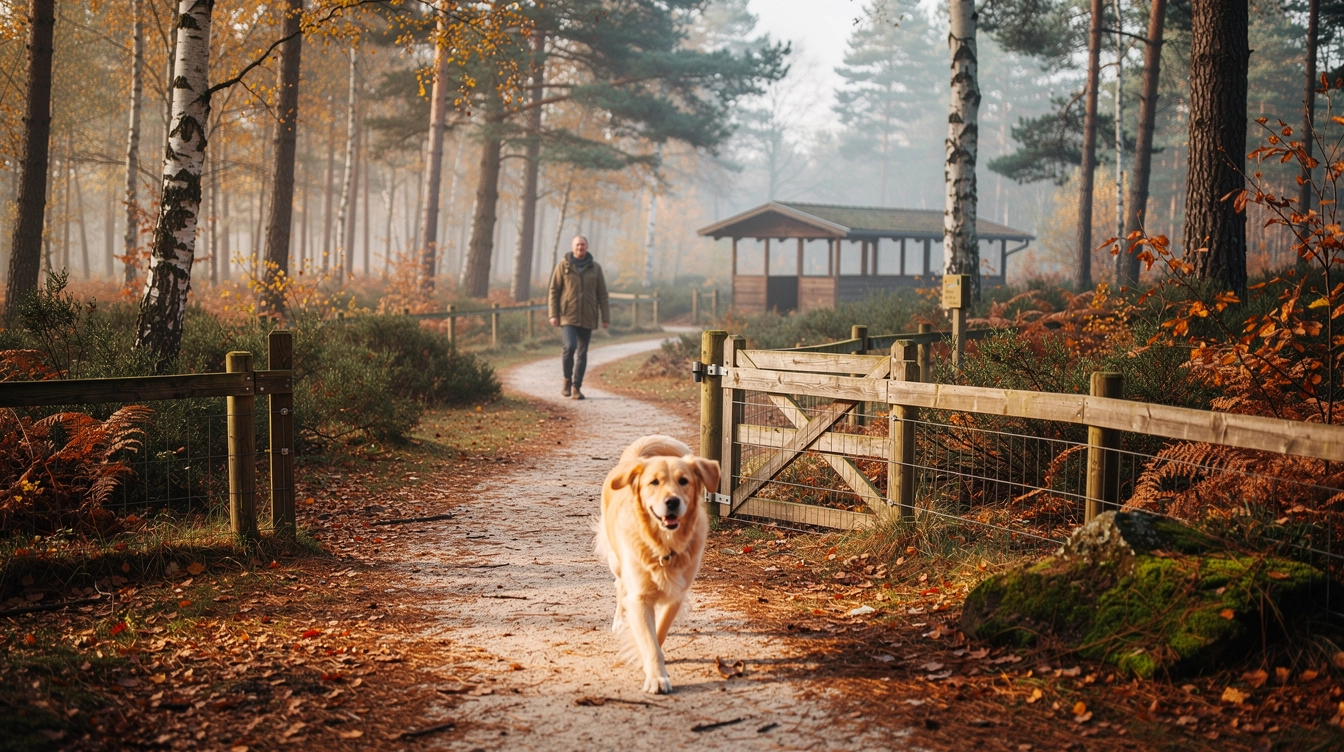
Start by checking if the area is fenced and how the entrance is designed. A gate that closes properly is important, especially if your dog is fast, curious, or easily startled. Some dog parks have double gates or a small sluice area where you can take off the lead calmly before the dog runs on.
The size of the area also matters. A very large dog park can be fantastic for a confident small dog, but it may feel overwhelming for a puppy or a dog that is just learning to be off the lead. A smaller area makes it easier to keep an eye on the dog and react if an unfortunate situation arises.
Also, look for areas with multiple paths and open spaces. Small dogs can benefit from being able to move away from a group without getting trapped in a corner. Dense vegetation can provide good opportunities for sniffing and play, but too much undergrowth makes it harder to see where the dog is.
Before the first visit, you can read more about the general rules for dog parks. The rules can vary from area to area, and it is always the dog owner's responsibility to assess whether the dog is ready to be off the lead.
Safety in a Dog Park for Small Dogs
The size difference between dogs is not necessarily a problem, but it should be taken seriously. A friendly, large dog can accidentally knock over a small dog during play, without either of them meaning any harm. Conversely, a small dog's quick movements can trigger chasing or rough play in other dogs.
Therefore, assess the area before letting your dog off the lead. Stand by the entrance for a while and notice how many dogs are there, how they play, and whether the owners have control over the situation. If there is a lot of commotion, it might be better to take a sniffing walk on the lead and return later.
Learn to recognise your dog's signals. If it seeks shelter behind your legs, keeps its tail low, yawns repeatedly, or tries to leave the play, it's time for a break. A small dog should not be pressured to greet everyone. Calmly walk away from the group, call your dog to you, and give it a chance to calm down.
It's a good idea to practice a reliable recall at home. Use a special treat or a happy, calm voice so the recall is associated with something positive. On the first visits, you can leave a long line on the dog if the rules and conditions allow it. This provides extra security while you get to know the area.
Also remember that a dog park is not a playground where dogs necessarily have to greet each other. Be considerate, ask other owners before the dogs meet, and be ready to interrupt play. This creates safer dog encounters for everyone.
How to Choose Terrain and Facilities for a Dog Park for Small Dogs
The terrain should suit the dog's age, size, and physical condition. A young or older small dog may struggle with steep slopes, large roots, and deep mud. Preferably choose an area with firm paths, moderately hilly terrain, and places where the dog can take breaks. Natural surfaces like soil, grass, and forest floor are usually comfortable for paws, but check for sharp branches, glass shards, and other objects.
Water is a practical facility, especially on warm days. If there is no water point, you should bring water and a collapsible bowl. Small dogs can get warm quickly when running intensely, even on a day that feels cool to you. Therefore, watch for heavy panting, lethargy, or unsteady walking, and end the outing if the dog seems overexerted.
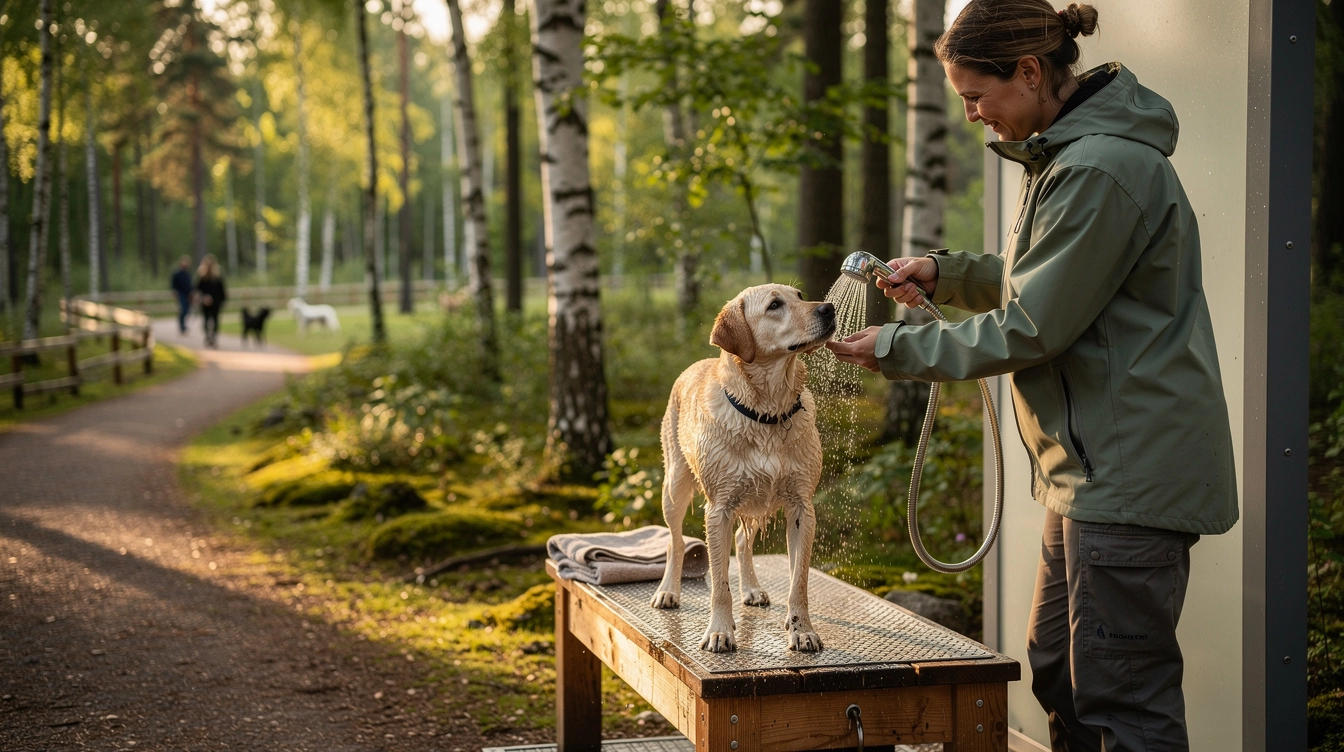
Parking close to the entrance can be an advantage if your dog gets stressed by traffic or has difficulty walking far. Benches make it easier to take a break, while waste stations help keep the area clean. On Hundeskoven.dk, you can explore different areas and compare their facilities before you leave home.
Also consider the timing. An early morning or a weekday outside the busiest hours often provides more peace. This can be the best way to introduce an insecure dog to the off-leash area. Start with short visits of 15-20 minutes and only increase the duration when the dog seems relaxed and curious.
Find Dog Parks for Small Dogs Near You with Hundeskoven.dk and the App
When looking for a suitable dog park for small dogs, distance is not the only factor that matters. An area a bit further away might be a better choice if it has secure fencing, quiet paths, and good opportunities to keep distance from other dogs.
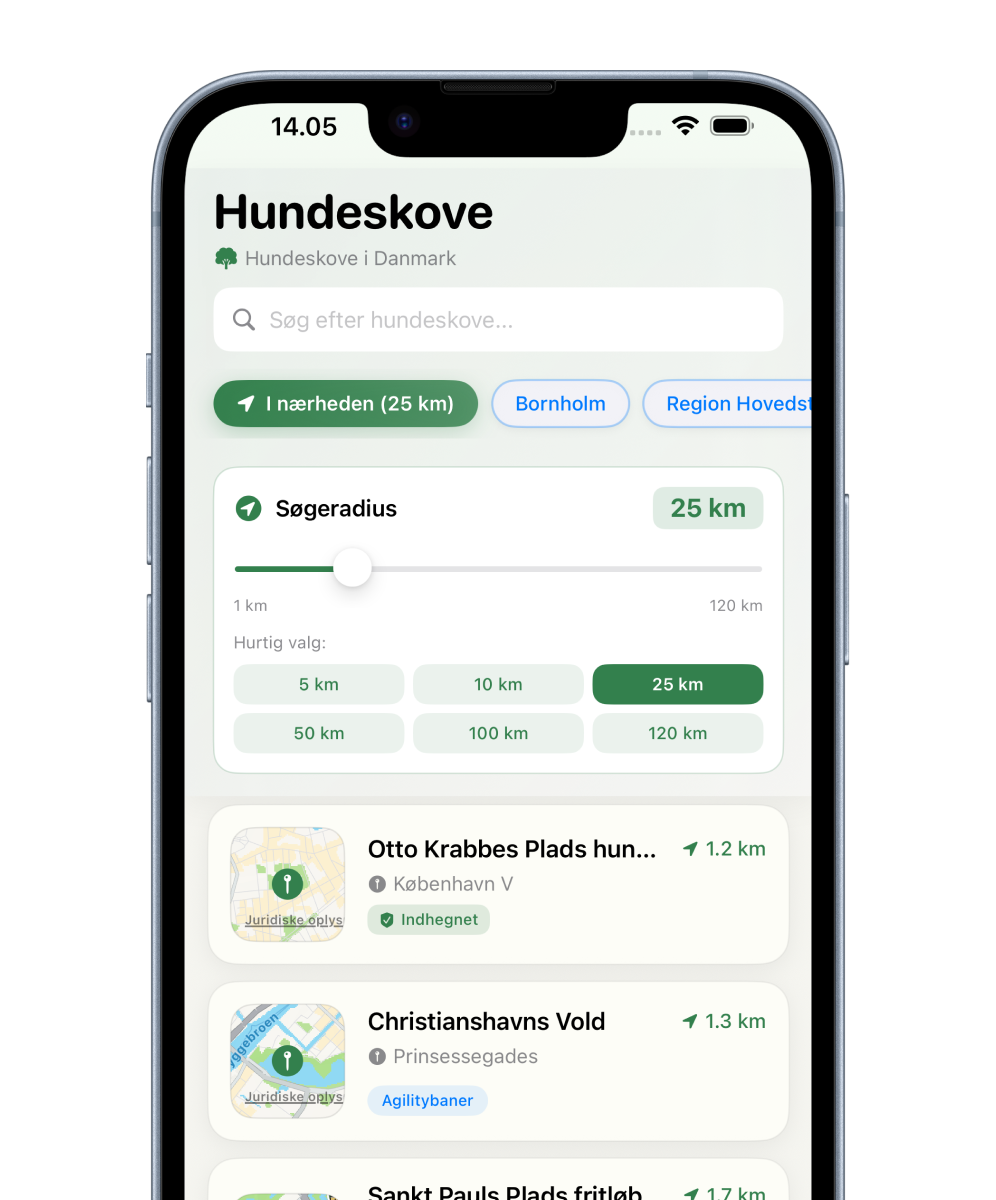
On the Hundeskoven app, you can find dog parks based on your current location and see if they are fenced. This makes it easier to choose an area that suits your dog when you want to try a new place. You can also plan trips to other parts of the country, for example among dog parks in Central Jutland, if you are visiting or on holiday.
Feel free to save the places that work well and make a small list with alternatives for different needs: a quiet dog park for weekdays, a larger natural area for the weekend, and a place with parking close by when time is short. This way, it becomes easier to give your dog varied experiences without compromising on safety.
A dog park for small dogs should first and foremost feel safe. Choose a fenced area with manageable terrain, keep an eye on dog encounters, and give your dog freedom at the pace it is ready for. Find a suitable place, pack water and bags, and get out into the Danish nature together – the app can help you discover the next dog park on your trip.