Dog Beach in October: Why Autumn is a Special Time
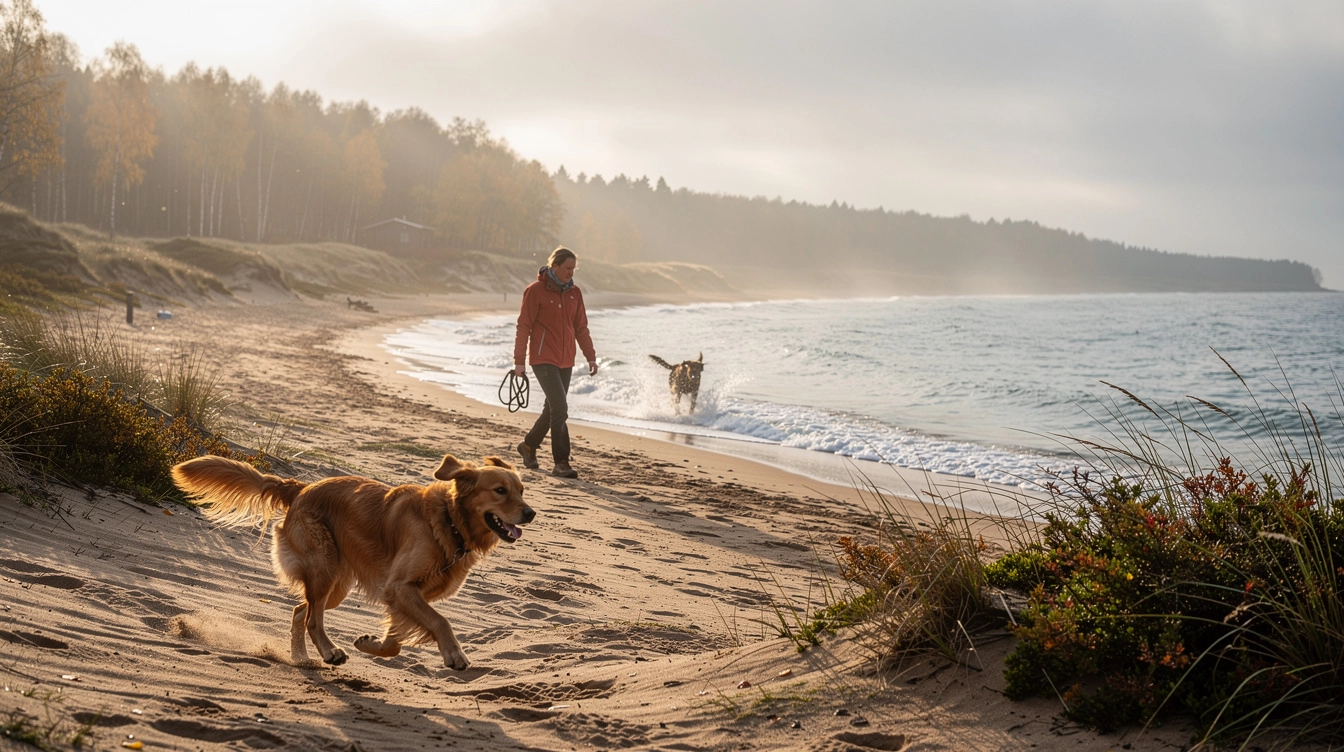
A dog beach in October can be the perfect destination for an autumn trip with your dog. The air is cooler, many beaches are less crowded, and your dog has the opportunity to sniff, run, and explore the coast at a more relaxed pace. However, even though the rules change from 1 October, off-leash is not automatically allowed everywhere. Local signs, nature considerations, and respect for other guests still apply.
Pack a towel, some fresh water, and possibly a long lead, and plan the trip so that both your dog, birdlife, and other beachgoers have a good experience.
From 1 October: What Do the Rules Mean for Dogs on Danish Beaches?
On many Danish beaches, dogs are allowed to run off the lead from 1 October to 30 April. From 1 May to 30 September, dogs must generally be on a lead on the beach. However, the rule can vary from place to place, and there may be permanent bans on dogs or lead requirements all year round.
Always look for local signs when you arrive. This is especially important at beaches near holiday home areas, nature reserves, bird protection areas, and popular bathing beaches. Some places only welcome dogs on certain stretches, while others have special rules for dunes, beach meadows, or access roads.
That your dog can be off the lead doesn't mean it should be. According to the dog law, you must have control over your dog and be able to call it to you. If your dog is unsure when meeting others, very interested in birds, or prone to running far away, a long lead is often the best choice – even on a beach where off-leash is otherwise allowed.
How to Find a Dog Beach in October that Suits an Autumn Nature Trip
The best dog beach depends on both your dog's temperament and the purpose of the trip. If your dog wants to run fast, a wide and open beach is often better than a narrow coastal path with many blind corners. If you have a young, older, or unsure dog with you, a quieter beach and a long lead can provide more security.
Consider these factors before you leave home:
- Access and parking: Is there a parking area nearby, or do you need to walk a longer distance through dunes and forest?
- Surface: Sand is gentle on many dog paws, but hard, wet sand can be demanding for older dogs. Stones, shells, and seaweed can cause small injuries.
- Distance to roads: If possible, choose an area where the beach is not close to a busy road or an open parking area.
- Other guests: A beach with many off-leash dogs is not necessarily the best choice for a dog that gets stressed in large groups.
- Nature protection: Keep a distance from birds, seals, and other animals. Avoid areas with obvious birdlife and respect barriers.
A good autumn trip doesn't have to take place only on the beach. Many coastal areas are close to forests, heathlands, or a dog park where you can continue the trip. A fenced dog park can be a safe place to let your dog run free before or after the beach visit, especially if the beach is narrow or filled with other people.
You can also combine the beach trip with a visit to one of the country's many dog parks in Zealand or dog parks in Central Jutland, depending on where you live.
Off-Leash by the Coast: Consider Other Dogs, Birdlife, and Local Rules
Before you let your dog off the lead, take a moment to look around. Are there other dogs on the beach? Can you see runners, children, fishermen, or riders further ahead? And are there birds foraging at the water's edge? Call your dog to you before passing others and ask if the dogs can greet each other.
It's a good idea to practice a reliable recall at home and in a dog park with few distractions. Reward your dog when it returns, even if it has been occupied with an exciting scent. On the beach, wind, waves, and new smells can make recall more challenging than usual.
Always bring bags and clean up after your dog – even if you are far from habitation. Also, avoid letting your dog drink seawater, as saltwater can cause vomiting and diarrhoea. Bring fresh water and rinse off sand and salt from paws and coat when the trip is over. Check especially between the toes for small stones, shells, or tangled tufts of seaweed.
Autumn weather changes quickly. A wet dog can get cold when lying still in the car, so a blanket and a dry towel are practical items to have with you. On days with strong winds or high waves, keep your dog away from steep cliffs and dangerously strong currents.
Use Hundeskoven.dk and the App to Plan a Dog-Friendly Trip by the Water
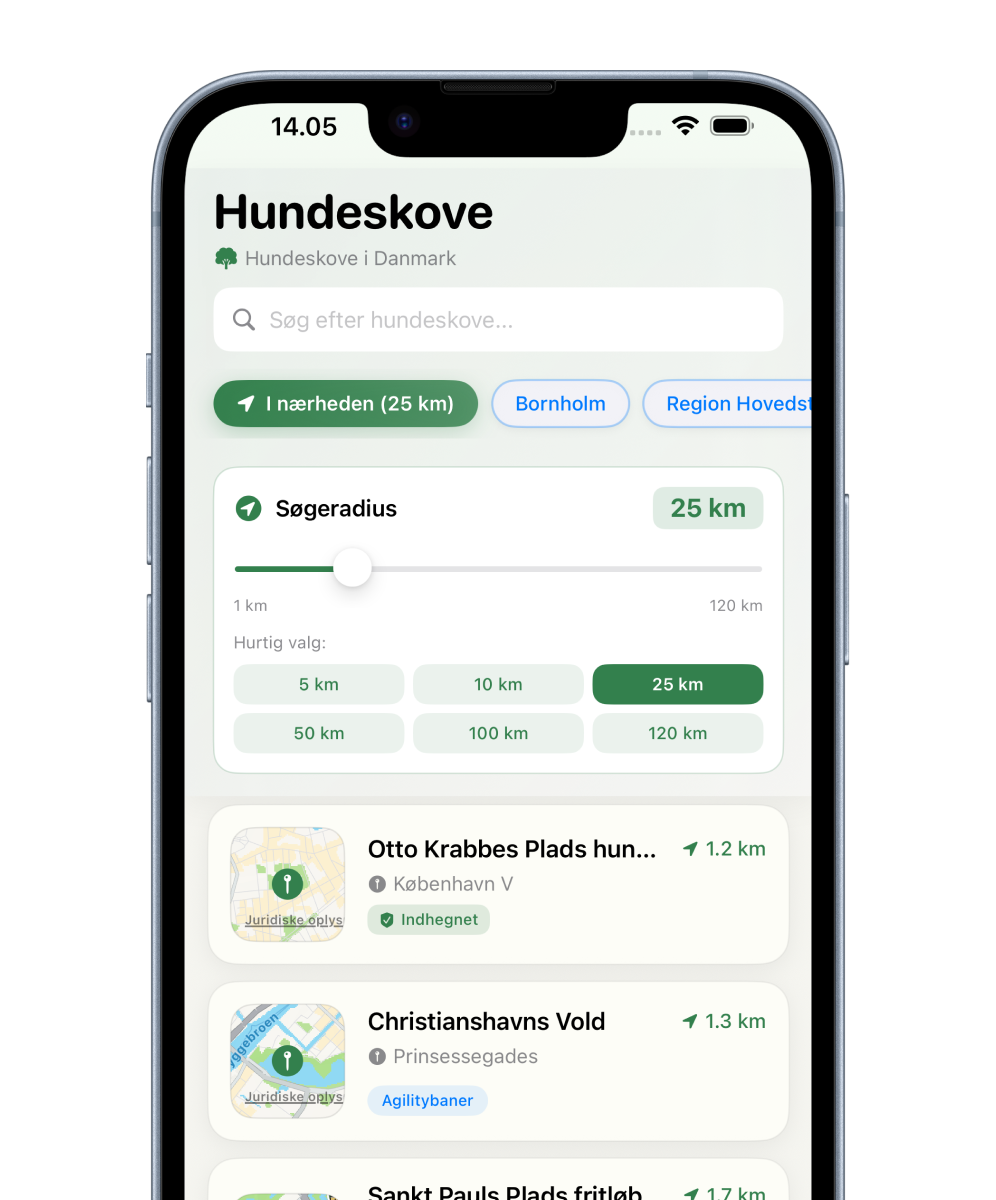
When looking for a good place for a coastal trip, the Hundeskoven app can help you find dog parks near your location. It makes it easier to plan a route where your dog can enjoy an experience by the water and have the opportunity for safe off-leash fun in a dog park. You can also check if the dog park is fenced and what facilities are available, such as parking, water, or waste stations.
Use Hundeskoven.dk to compare options across Denmark, and always check local signs at the beach on the day itself. Rules and conditions can change, and nature needs space – even when we bring our dogs.
A dog beach in October is a lovely starting point for a refreshing nature trip when you plan according to the weather, rules, and your dog's needs. Find a quiet spot, bring the lead for safety, and take your time to experience the coast together. With the Hundeskoven app, it's easier to find a nearby dog park, so the autumn trip can continue with safe off-leash fun when the beach is not the right place to let your dog run free.